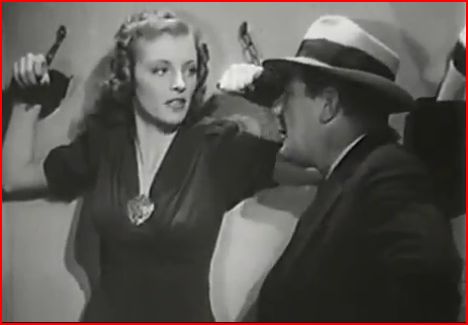
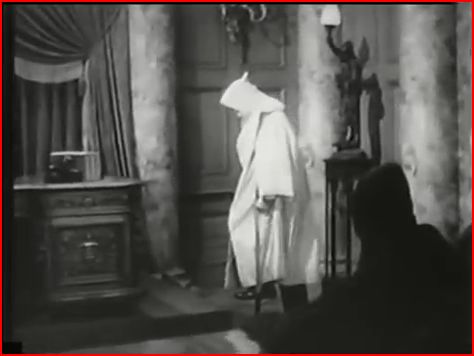
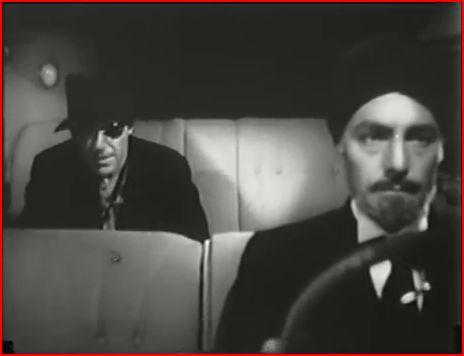
At the end of Chapter Three of this Columbia Pictures adaptation of Norvell Page's pulp hero, Richard Wentworth was knocked into a mean looking power-plant thingy that turned explosive on impact. At the opening of this chapter, after the narrator's usual long-winded recap -- he has to talk over all the footage from last week's climax -- Wentworth, aka The Spider, simply gets better and gets out of Dodge when the cops show to disrupt The Octopus's plan to black out the city. By now, Wentworth has figured out that The Octopus is no common gangster, but represents "organized crime with more than money as a goal. He wants control." He specifically wants control of utilities, having first muscled into transportation and more recently targeted electrical power. That The Octopus is engaged in "terrorism" rather than mere crime is in keeping with the apocalyptic tone of the Popular Publications pulps, though whether the villain can keep escalating his attacks like his print counterparts remains to be seen.
Out of nowhere Wentworth gets a potentially important lead from a young friend of his, the gas station operator and ham radio enthusiast Charlie Dennis. In The Spider's day a ham radio operator was as close as you could get to a computer hacker today, and Charlie has inadvertently hacked into the Herzen Band, a frequency outside the range of most radios on which the gas jockey is picking up inscrutable, apparently coded transmissions. Wentworth transcribes a typical broadcast and has his old war buddy Jackson set about deciphering the code. Charlie has instantly become an important asset for the good guys, but The Octopus's men have detected the hack somehow, and their master orders Charlie eliminated. So we have this episode's plot wrapped up: The Spider will have to save Charlie from the bad guys....except that he doesn't. In fact, Wentworth and his pals are completely clueless about Charlie's imminent doom and make no effort to protect what could have been a crucial source of intelligence on The Octopus's activities. In a flawless victory for the villain, Charlie is murdered and his gas station (and all-important radio) blown up with Wentworth none the wiser.
The main characters never even acknowledge that anything has happened to poor Charlie, though I have to imagine that the Herzen Band will become important again later. To be fair, our heroes have their own security to think about, since The Octopus's goons are still stalking Wentworth. Two of them jump Richard outside his hotel suite. He fights them off but finds that Nita and Jackson, whom he'd left in the suite, have been snatched, the snatchers leaving behind a note telling Richard to expect a message from The Octopus.
The mystery villain has several balls in the air. While trying to outmaneuver Wentworth, he's also plotting to take out all the city's radio stations so he can monopolize the airwaves when making his demands. The broadcast gives Wentworth and Ram Singh a chance to use their triangulation machines to pinpoint the source of the transmission, which they expect to be The Octopus's lair and their friends' prison. Finding the likely spot, they break through an electrified fence and prepare for a two-pronged attack on the building. Despite being warned to be careful, the mighty Ram Singh promptly gets KOd while skulking in the bushes and joins Nita and Jackson in chains in a cell.
This place proves to be some kind of torture house. The cell is rigged to fill with water in order to drown its prisoners.While they thrash about in vain and the water rises, The Spider enters another end of the house and surprises a bunch of gangsters. For some reason he surrenders his advantage of surprise to hunker behind a toppled table, content to trade shots with the surviving goons until one quick-thinking, courageous bad guy closes a door to trap The Spider in a room with a gas bomb. As if that wasn't bad enough, this room is rigged to release a lethal volume of steam. A double cliffhanger closes an episode that has not gone well for the good guys. It's good at holding our interest, however, since it shows The Octopus and his men as more effective serial villains than we typically see. We'll see how long that lasts....
A randomly comprehensive survey of extraordinary movie experiences from the art house to the grindhouse, featuring the good, the bad, the ugly, but not the boring or the banal.
Tuesday, July 19, 2016
Sunday, July 17, 2016
DVR Diary: BENGAZI (1955)
They didn't add the h (for Hillary?) until later, but this is the Libyan city of 21st century infamy, back in the early days after World War II when the former Italian colony was under Anglo-French occupation. But John Brahm's adventure film from the last days of RKO could have been set in any colonial place for all the attention it pays to natives. It's a slightly noirish treasure hunt as some disreputable veterans and a seedy saloon owner head into the desert, where a ruined mosque hides the gold one of the gang stole from local tribesmen. Our hero, if only by default, is John Gilmore, a refugee from small town America, where it's a big event when the local movie theater changes its program once a week. His ball and chain is the bar owner, Donovan (an elderly Victor McLageln), who seems incapable of backing up whatever bluster he can still manage. He wants in on the treasure so he can take care of his daughter back on the Emerald Isle, but unbeknownst to him she (Mala Powers) has come to Bengazi looking for him. They haven't seen each other for so long that they blow right past each other in their first encounter, and it's not until Gilmore finds out her name that he arranges a proper reintroduction. Once the three-man gang goes into the desert, the daughter joins a Scots officer (Richard Carlson with a wobbly accent) in pursuit by plane. In the mosque, the third partner is almost immediately killed by virtually invisible tribesmen, while Gilmore and Donovan hunker down for a siege. Reinforcements are actually the last thing they need, especially since Donovan's daughter and the officer promptly get their plane blown up after they've landed. The intruders are picked off one by one -- there are expendable people I haven't mentioned, and McLageln is mercifully eliminated relatively early -- until Gilmore learns some moral lesson and decides to sacrifice the treasure, if not himself, in order to save the final girl and the wounded officer. Apart from some creative use of the ruined mosque set and the plane landing in the desert Brahm doesn't take much advantage of the Superscope wide screen and Bengazi overall seems much like the sort of programmer that might have been made ten or fifteen years earlier. Conte's a good actor who always managed to retain some dignity throughout his career, but McLageln is embarrassing if not pitiful, clearly having nothing left at this late point in his career. The picture's too-good-to-be-true ending is a final insult to the viewer, but I suppose we could wish everyone's problems in Libya could be solved so easily.
Wednesday, July 13, 2016
Serial Pulp: THE SPIDER'S WEB (1938), Chapter Three: High Voltage
The resolution of last episode's cliffhanger was set up when we saw Richard Wentworth's henchman Ram Singh monitoring the situation in the Adams office as Wentworth, The Spider, prepared to rescue his girlfriend Nita Van Sloan. Once the faithful Sikh saw that The Octopus's men had set a deathtrap for The Spider, he rushed to the building. After the recap, this episode opens with Ram arriving just in time to help fellow flunky Jackson get the mechanical hoist back in control so Nita and The Spider have an easy last leg of their trip to the ground. After seeing Nita off, The Spider re-enters the building to fetch Adams from a vault in order to interrogate him about The Octopus. As he drives away, more minions take up the pursuit. The Spider exhorts Adams to jump from the car before it goes over a cliff, but Adams is no Spider and burns with the vehicle.
Inevitably, The Spider is blamed for the neophyte traction magnate's murder, provoking a hissy fit from Wentworth."All because a few thugs are killed, the cry goes up: Get the Spider!" he complains, "Every time The Spider strikes, all they see is the act. Never a thought for the real reason behind it." Wentworth is more thin-skinned a crimefighter than The Green Hornet, for instance, who wants to be thought of as a criminal, since that makes it easier for him to move through the underworld. But pity party over, it's back to work. "I've got to find the Octopus, and destroy him," our hero resolves.
Civilian life is no shelter for Richard Wentworth as it is for other costumed crimefighters. Since Wentworth himself is known as a criminologist who gets involved in prominent cases, he is just as much a target out of costume as The Spider is. The Octopus has known since the last chapter that Wentworth is an enemy, so he has the Wentworth house staked out, with gunsels waiting to blast Wentworth the moment he steps outside. Fortunately for our team, The Octopus's minions are idiots. Richard dodges them by ordering a bouquet of "special flowers" for Nita from a friendly, confidential florist. The delivery made, Wentworth swaps clothes with the delivery man and marches out to the delivery truck, a leftover bouquet obscuring his face as the bored gunsels watch. "This is a useless job," one reflects, but if this serial teaches us anything it's that there are no useless jobs, only useless people.
Wentworth puts on his Blinky McQuade disguise to seek out a gangster he'd recognized among the men in Adams' office. Blinky, the one-eyed safecracker, will be hard up and looking for any kind of job Frank Martin can give him. McQuade is perhaps the most likable gangster you'll ever meet, and Martin gladly lets him in on a warehouse job his gang is pulling on their own. If that goes well, Martin may use him on an Octopus job. Martin says Blinky can be trusted not to blab about things, but you'd think he'd wonder after the cops show up in the middle of the warehouse job. To be fair, it isn't clear if Wentworth called in a tip once Blinky found out where the job was, and in any event a wounded Martin is too grateful to think too much about things after Blinky rescues him from arrest by sticking up a cop with his finger.
Once Martin tells him what the Octopus has lined up -- a raid on a power plant in an effort to black out the city -- Blinky arranges to have Jackson show up at his hideout in a cop costume to take him in for questioning. "The Octopus ordered this job done so there wouldn't be a light left on in the city," a gangster helpfully explains to the audience and the men gathered not at all conspicuously or suspiciously outside the Power & Light company. The Spider shows up, guns blazing, to break up the sabotage, but has the bad luck to get socked into a great big spark-emitting machine to end the episode. Of course, Columbia spoils the cliffhanger by telling us immediately what Wentworth will be up to next time, but I suppose if you knew going in that there would be fifteen chapters you could guess that the hero wouldn't get whacked in Episode Three. It makes you wonder why serial studios bothered with cliffhangers. If you think about it, take away the cliffhangers and instead of Saturday afternoon serials you have the modern short-form TV season -- except now you can watch any episode of some shows and really believe a hero might die.
Some of Richard Wentworth's victims bear "the mark of The Spider."
Inevitably, The Spider is blamed for the neophyte traction magnate's murder, provoking a hissy fit from Wentworth."All because a few thugs are killed, the cry goes up: Get the Spider!" he complains, "Every time The Spider strikes, all they see is the act. Never a thought for the real reason behind it." Wentworth is more thin-skinned a crimefighter than The Green Hornet, for instance, who wants to be thought of as a criminal, since that makes it easier for him to move through the underworld. But pity party over, it's back to work. "I've got to find the Octopus, and destroy him," our hero resolves.
Civilian life is no shelter for Richard Wentworth as it is for other costumed crimefighters. Since Wentworth himself is known as a criminologist who gets involved in prominent cases, he is just as much a target out of costume as The Spider is. The Octopus has known since the last chapter that Wentworth is an enemy, so he has the Wentworth house staked out, with gunsels waiting to blast Wentworth the moment he steps outside. Fortunately for our team, The Octopus's minions are idiots. Richard dodges them by ordering a bouquet of "special flowers" for Nita from a friendly, confidential florist. The delivery made, Wentworth swaps clothes with the delivery man and marches out to the delivery truck, a leftover bouquet obscuring his face as the bored gunsels watch. "This is a useless job," one reflects, but if this serial teaches us anything it's that there are no useless jobs, only useless people.
Wentworth puts on his Blinky McQuade disguise to seek out a gangster he'd recognized among the men in Adams' office. Blinky, the one-eyed safecracker, will be hard up and looking for any kind of job Frank Martin can give him. McQuade is perhaps the most likable gangster you'll ever meet, and Martin gladly lets him in on a warehouse job his gang is pulling on their own. If that goes well, Martin may use him on an Octopus job. Martin says Blinky can be trusted not to blab about things, but you'd think he'd wonder after the cops show up in the middle of the warehouse job. To be fair, it isn't clear if Wentworth called in a tip once Blinky found out where the job was, and in any event a wounded Martin is too grateful to think too much about things after Blinky rescues him from arrest by sticking up a cop with his finger.
Once Martin tells him what the Octopus has lined up -- a raid on a power plant in an effort to black out the city -- Blinky arranges to have Jackson show up at his hideout in a cop costume to take him in for questioning. "The Octopus ordered this job done so there wouldn't be a light left on in the city," a gangster helpfully explains to the audience and the men gathered not at all conspicuously or suspiciously outside the Power & Light company. The Spider shows up, guns blazing, to break up the sabotage, but has the bad luck to get socked into a great big spark-emitting machine to end the episode. Of course, Columbia spoils the cliffhanger by telling us immediately what Wentworth will be up to next time, but I suppose if you knew going in that there would be fifteen chapters you could guess that the hero wouldn't get whacked in Episode Three. It makes you wonder why serial studios bothered with cliffhangers. If you think about it, take away the cliffhangers and instead of Saturday afternoon serials you have the modern short-form TV season -- except now you can watch any episode of some shows and really believe a hero might die.
To be continued...
Monday, July 11, 2016
DEATH BY HANGING (1968)
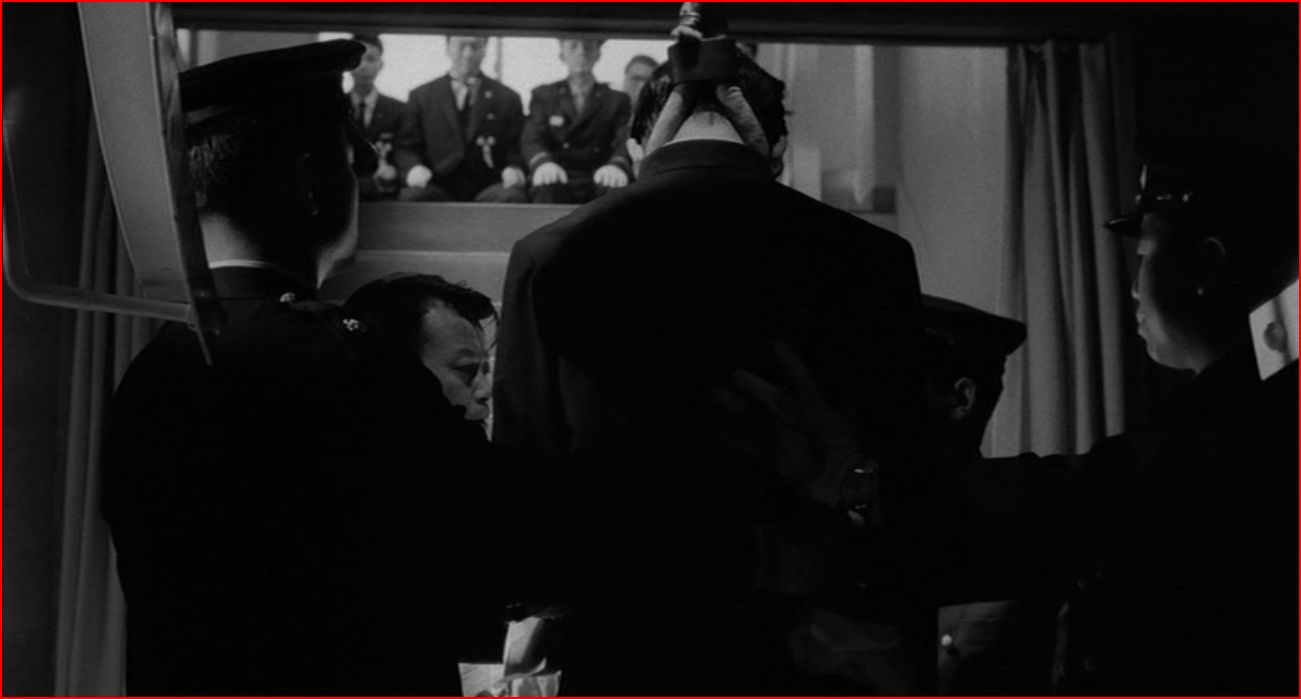
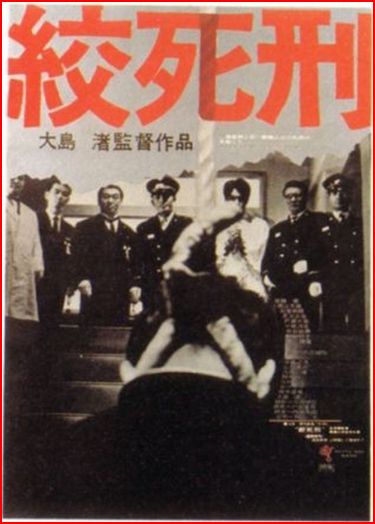
Death by hanging in Japan means death by strangulation, or else Nagisa Oshima's admittedly magical-realist satire wouldn't even get started. Death By Hanging would be a very different movie if everyone in the audience assumed that the condemned man's neck should have been broken. Instead, the trouble starts when the man's heart keeps beating beyond all expectation. The officials aren't sure if "R" (Do-yun Yu) should be hung a second time, given their assumption that they're actually dealing with some sort of revenant. R, a rapist and murderer, recognizes some of the officials when he wakes up but claims to have no recollection of his crimes. His Christian chaplain speculates that R's soul has left his body, which means this soul-less but sentient husk should not be hanged again. The other officials, all involved with law enforcement, agree that R has to regain his memories and recognize his guilt before he can be hung a second time. The main action of Oshima's black comedy is the blundering effort to reawaken R's identity, from his wretched background as a Korean immigrant to his carnal lust for his victim. This mock-epic attempt at recovering memories takes the cast from the newspapered walls of an imagined Korean hovel to the rooftops of Tokyo as a reenacted seems to turn all too real.
The director's not-so-subtle message is (in part) that R's original identity was shaped in the first place by the same sort of national prejudices that make the officials look like bigoted idiots, not to mention the very circumstance of being a Korean in Japan. From the way they act when restaging R's family life, Koreans are the n-words of Japan, viewed through a prism of minstrelsy as a rabble of slobbovian morons who piss on each other during family arguments. Having the Japanese act out their stereotypes of Koreans may be the best way to subvert those stereotypes, and it's definitely one of the funniest parts of an often-hilarious movie. As a black comedy it's like Dr. Strangelove in microcosm, with the stakes reduced to one life but with the cartoonish cast behaving just as ludicrously, or even more so in proportion to the situation.
Death By Hanging is a kind of companion piece to Oshima's previous film, the one with the unfortunate English title Sing a Song of Sex. Despite the bawdy title, that film is an ominous, brilliant portrait of Japan on a precipice of revolt and reaction in the form of rape. In turn, despite its ominous English title, Death By Hanging revels in its absurdity and even throws in a Japanese bawdy song of the sort that superficially formed part of Sing a Song's subject matter. In both movies Oshima seems to be indicting a bawdy streak in Japanese culture that seems inherently reactionary and oppressive (not to mention complacent) insofar as it helps shape R's carnal lust and makes women eligible for the sort of rape the officials so casually or sometimes enthusiastically reenact.
Death also renews an interest in Christianity that Oshima had expressed in his 1962 historical epic The Christian Revolt.It's apropos given the popularity of Christianity among Koreans, which makes it almost natural for Oshima to imagine R, who is based on a real-life convict who wrote a famous book of prison letters before his execution, as a Christ figure who has to die a second time, or as often as possible, for the imagined sins of Koreans as a race. Jesus's saying that he who imagines himself committing sin is just as guilty as if he had committed the actual act is pointedly invoked, with an Oshima twist that indicts those who imagine others committing sins like rape, as if R was fulfilling a Japanese expectation of carnal violence from Koreans. Any supposed Korean proclivity for rape or other crimes thus becomes a projection of Japanese culture's own yen for such atrocities. In effect, Oshima suggests, condemned Koreans, if not all condemned men, die a second death as the nation reassures itself that the dead deserved what they got, while their victims did not. That seems to be the point of the apparition (Akiko Koyama) who calls herself R's sister and tempts him to see his crime as a revolt against Japanese oppression. That the Japanese on some level buy into that interpretation seems apparent from the way the officials one by one start to see the sister when most of them hadn't at first. Eventually, there's an even more urgent need to "liquidate" this accusing ghost than there is to reawaken R's guilt. R's turn finally comes after the chief prosecutor, the one official who's retained some dignity throughout, dares him to leave the prison if he thinks himself innocent. R can't do it because he realizes he can't be innocent in Japan, even as he claims that he isn't guilty in the way the Japanese portray his guilt. In the end he accepts the noose again and the trapdoor opens beneath him, to reveal an empty noose below like the empty sepulcher of Christian myth. Perhaps this second death has exorcised whatever of R had haunted his executioners, but you can easily imagine an eternal recurrence of these scenes despite R's hope to die for the sake of all the other Rs. Death By Hanging can be heavyhanded at times but Oshima mostly succeeds at his Brechtian work of thought-provoking absurdity. The more I see of his films from the Sixties, the more it seems like one of the great bodies of work in the wild world of cinema.
Sacrilege: a drunken Christian priest loses his inhibitions and lunges for a singing partygoer's strap-on.
Death By Hanging is a kind of companion piece to Oshima's previous film, the one with the unfortunate English title Sing a Song of Sex. Despite the bawdy title, that film is an ominous, brilliant portrait of Japan on a precipice of revolt and reaction in the form of rape. In turn, despite its ominous English title, Death By Hanging revels in its absurdity and even throws in a Japanese bawdy song of the sort that superficially formed part of Sing a Song's subject matter. In both movies Oshima seems to be indicting a bawdy streak in Japanese culture that seems inherently reactionary and oppressive (not to mention complacent) insofar as it helps shape R's carnal lust and makes women eligible for the sort of rape the officials so casually or sometimes enthusiastically reenact.
Death also renews an interest in Christianity that Oshima had expressed in his 1962 historical epic The Christian Revolt.It's apropos given the popularity of Christianity among Koreans, which makes it almost natural for Oshima to imagine R, who is based on a real-life convict who wrote a famous book of prison letters before his execution, as a Christ figure who has to die a second time, or as often as possible, for the imagined sins of Koreans as a race. Jesus's saying that he who imagines himself committing sin is just as guilty as if he had committed the actual act is pointedly invoked, with an Oshima twist that indicts those who imagine others committing sins like rape, as if R was fulfilling a Japanese expectation of carnal violence from Koreans. Any supposed Korean proclivity for rape or other crimes thus becomes a projection of Japanese culture's own yen for such atrocities. In effect, Oshima suggests, condemned Koreans, if not all condemned men, die a second death as the nation reassures itself that the dead deserved what they got, while their victims did not. That seems to be the point of the apparition (Akiko Koyama) who calls herself R's sister and tempts him to see his crime as a revolt against Japanese oppression. That the Japanese on some level buy into that interpretation seems apparent from the way the officials one by one start to see the sister when most of them hadn't at first. Eventually, there's an even more urgent need to "liquidate" this accusing ghost than there is to reawaken R's guilt. R's turn finally comes after the chief prosecutor, the one official who's retained some dignity throughout, dares him to leave the prison if he thinks himself innocent. R can't do it because he realizes he can't be innocent in Japan, even as he claims that he isn't guilty in the way the Japanese portray his guilt. In the end he accepts the noose again and the trapdoor opens beneath him, to reveal an empty noose below like the empty sepulcher of Christian myth. Perhaps this second death has exorcised whatever of R had haunted his executioners, but you can easily imagine an eternal recurrence of these scenes despite R's hope to die for the sake of all the other Rs. Death By Hanging can be heavyhanded at times but Oshima mostly succeeds at his Brechtian work of thought-provoking absurdity. The more I see of his films from the Sixties, the more it seems like one of the great bodies of work in the wild world of cinema.
Saturday, July 9, 2016
Serial Pulp: THE SPIDER'S WEB (1938), Chapter Two: Death Below
We left Richard Wentworth, aka The Spider, attempting to drive a truck loaded with explosives away from a bus depot. The first chapter of the Columbia Pictures serial based on Popular Publications' pulp crimefighter ended with the truck blowing up, but chapter two opens (after the obligatory recap, heavy with narration) with an easy cheat: our hero simply dived out the opposite door of the truck before it blew. After dealing with The Octopus's men, The Spider now has to dodge the police who consider him a criminal. He carjacks someone and hops from the moving vehicle into Ram Singh's getaway car some safe distance from the cops.
The Spider then calls in a tip telling Police Commissioner Kirk to raid the Octopus hideout where Wentworth had been imprisoned briefly last episode. Wentworth himself shows up just before the raid and manages to lead his friend Kirk into a deathtrap. The doors and windows lock just after someone tosses in a gas bomb to kill the crimefighters. Wentworth figures that short-circuiting the room by shooting a light-switch will unlock the window, and he and Kirk take the fire escape out.
After things have calmed down, Wentworth checks in at the commissioner's office, where he's meeting with an impatient committee of businessmen who want results from the hunt for the mastermind terrorizing transportation, whose name remains unknown to the good guys. While all these people are big businessmen, they missed one detail in the business news section of the newspaper that Wentworth reads: J. R. Adams, an unknown in the business world, has been named the new head of the Roberts Bus Line, Roberts having been murdered last chapter. Wentworth figures that Adams is either the head terrorist himself or one of his stooges. After asking the businessmen to leave the office, Wentworth discusses his plans for dealing with Adams in detail with the commissioner. Right away, we see The Octopus tell his hooded minions that he expects Wentworth to make a move on Adams and will make plans to deal with Wentworth. This seems like a tip-off that The Octopus -- as you'll recall, we see him as a bulky, limping figure in white robes, hood and mask and hear him through a distorting speaker system -- is one of the big businessmen, or else in cahoots with one of them.
Wentworth isn't satisfied with bugging Adams' office. He and his minion Jackson infiltrate the place as telephone men, and while Wentworth attempts to distract the secretary -- on screen it looks like he's doing a poor job -- Jackson inconspicuously installs a television camera hidden inside a book. By "inconspicuously," I mean that Jackson shows the movie camera the camera embedded in the book, then opens the book to show us all the machinery inside, while we take it on faith that the secretary hasn't noticed any of this.
Back at chez Wentworth, Richard, Jackson and Ram Singh turn out the lights in their TV room to watch the J. R. Adams show, after the set takes a minute to warm up. Right away someone asks Adams what the latest orders are, but he doesn't know apart. However, Wentworth now knows he's dealing with The Octopus, who checks in via intercom soon enough to explain conveniently that he intends to take over "certain industries," warn Adams about Wentworth, and provide some protection in the form of a hostage: Nita Van Sloan fresh from the hospital and still in her aviatrix outfit from chapter one. Wentworth and the boys freak out at the sight and Ram Singh is ready to kill, but you'll notice that Nita takes it all like a trouper, showing neither fear nor any other emotion, very much like an actress who's been given no direction whatsoever in the scene.
Jackson delivers The Spider to the Adams building, where our hero hops on a mechanical hoist so Jackson can send him straight up to the villain's floor. There's a hint of pulp flair to the shot of The Spider poised on the chain outside a window, his cape billowing more dramatically (if not necessarily more manageably) than Batman's in the same studio's infamous 1943 serial. Entering through the window, he kills a guard by knocking him into an electrified doorknob and prepares to enter Adams's office. Inside, Adams's goons are prepared to blast whoever comes through the door, or else blast the still-impassive Nita. The Spider enters, using the dead guard as a human shield. The goons are so shocked by this atrocity that Nita nimbly steps out of the kill box while her enemies stare helplessly. The Spider forces the bad guys to lock themselves in a vault, but he and Nita still have to dodge goons coming upstairs. Out the window they go so they can ride earthward on the hoist, but when Jackson has to fight another goon the hoist slips out of control and Spita (to make a ship of it) begin to plunge at deadly speed, and now Nita screams....
This episode left me wondering what purpose poor Adams was supposed to serve. Obviously he was only going to be a front for The Octopus, but was he appointed only to get Wentworth's attention with his obvious lack of credentials? As for The Octopus, what exactly was his plan to deal with Wentworth? Was it simply to retain Nita as a hostage in case Wentworth showed up, or did he know about the hidden camera after all and had her paraded in front of the camera to draw Wentworth back to the building and its feeble trap? Whatever you make of it, it seems like a waste of his time to focus on Wentworth when he should be consolidating his gains from last episode, but that's serial logic for you. Maybe our villain will have something better to do in chapter three, "High Voltage," coming soon to this blog.
The Spider then calls in a tip telling Police Commissioner Kirk to raid the Octopus hideout where Wentworth had been imprisoned briefly last episode. Wentworth himself shows up just before the raid and manages to lead his friend Kirk into a deathtrap. The doors and windows lock just after someone tosses in a gas bomb to kill the crimefighters. Wentworth figures that short-circuiting the room by shooting a light-switch will unlock the window, and he and Kirk take the fire escape out.
After things have calmed down, Wentworth checks in at the commissioner's office, where he's meeting with an impatient committee of businessmen who want results from the hunt for the mastermind terrorizing transportation, whose name remains unknown to the good guys. While all these people are big businessmen, they missed one detail in the business news section of the newspaper that Wentworth reads: J. R. Adams, an unknown in the business world, has been named the new head of the Roberts Bus Line, Roberts having been murdered last chapter. Wentworth figures that Adams is either the head terrorist himself or one of his stooges. After asking the businessmen to leave the office, Wentworth discusses his plans for dealing with Adams in detail with the commissioner. Right away, we see The Octopus tell his hooded minions that he expects Wentworth to make a move on Adams and will make plans to deal with Wentworth. This seems like a tip-off that The Octopus -- as you'll recall, we see him as a bulky, limping figure in white robes, hood and mask and hear him through a distorting speaker system -- is one of the big businessmen, or else in cahoots with one of them.
Wentworth isn't satisfied with bugging Adams' office. He and his minion Jackson infiltrate the place as telephone men, and while Wentworth attempts to distract the secretary -- on screen it looks like he's doing a poor job -- Jackson inconspicuously installs a television camera hidden inside a book. By "inconspicuously," I mean that Jackson shows the movie camera the camera embedded in the book, then opens the book to show us all the machinery inside, while we take it on faith that the secretary hasn't noticed any of this.
This episode left me wondering what purpose poor Adams was supposed to serve. Obviously he was only going to be a front for The Octopus, but was he appointed only to get Wentworth's attention with his obvious lack of credentials? As for The Octopus, what exactly was his plan to deal with Wentworth? Was it simply to retain Nita as a hostage in case Wentworth showed up, or did he know about the hidden camera after all and had her paraded in front of the camera to draw Wentworth back to the building and its feeble trap? Whatever you make of it, it seems like a waste of his time to focus on Wentworth when he should be consolidating his gains from last episode, but that's serial logic for you. Maybe our villain will have something better to do in chapter three, "High Voltage," coming soon to this blog.
Wednesday, July 6, 2016
Serial Pulp: THE SPIDER'S WEB (1938), Chapter One: Night of Terror
For some people, pulp fiction is embodied by crimefighting heroes like Doc Savage and The Shadow. They're the two best known of a generation of pulp heroes that flourished in the 1930s, before and during the advent of comic book superheroes. One of their peers was The Spider, "Master of Men," who was published by Popular Publications, while the big two were put out by Street & Smith. Among the most popular hero pulps, The Spider was the first to be made into a movie serial, not long after The Shadow had made his unsuccessful feature-film debut. In pulp, The Spider's adventures were written mostly by Norvell W. Page, using the Grant Stockbridge pseudonym. I find Page the best of the hero-pulp writers, the master of the often overwrought Walter Gibson (who wrote The Shadow as Maxwell Grant) and the often clumsy Lester Dent (who wrote Doc Savage as Kenneth Roberson). Page could paint a word picture of dramatic if not fantastic action better than his rivals, and his apocalyptic imagination makes The Spider resonate with modern readers in ways his rivals can't match. Of course, what Page wrote might be called "destruction porn" today, because The Spider's enemies don't play around. They're usually terrorists of some sort rather than mere gangsters, for whom mass destruction is the way to power or the way to wealth through mass extortion. Cities were devastated and civilians slaughtered before the Spider meted out justice to the guilty; like comic-book heroes today, The Spider wasn't very good at preventing mayhem. He was better at assuring that people didn't get away with it. Richard Wentworth was The Spider, but unlike the Zorro-Batman archetype, Wentworth also fought crime in his civilian identity as an amateur criminologist and often spent large portions of Spider stories doing so out of disguise. Wentworth had a modest support team consisting of his chauffeur Jackson, his butler Jenkins, his all-around man friday Ram Singh and his fiancee Nita Van Sloan. No relation to Edward the actor, Nita often bemoans the apparent fact that Richard's costumed career prevents them from marrying -- presumably since it would be impracticable for them to have children -- but for all intents and purposes she embraces his lifestyle to the point of pinch-hitting as The Spider on occasion. She may not have the same sort of training Richard and his other helpers have, but a machine gun is often a great equalizer and she can use one with relish. Rounding out the regular cast is Police Commissioner Kirkpatrick, a friend of Wentworth who suspects him of being The Spider, whom he'd have to arrest as a killer vigilante, but never can prove the dual identity.
Serials notoriously wrought havoc on comic-book heroes, altering origins and other details to suit often unclear purposes. By comparison, at least on the evidence of Chapter One, The Spider's Web is fairly faithful to its pulp source. Its major innovation is the costume The Spider (Warren Hull) wears. While the pulp character often scurried through the city in a fright wig and makeup to scarify criminals, he was shown on the magazine covers in more debonair garb and a modest domino mask. The cinematic Spider wears a full face mask with a spiderweb pattern matching that of his cape. He has his full supporting cast, though the police commish's name has been shortened arbitrarily to Kirk. Nita (Iris Meredith) makes a good first impression as co-pilot of Wentworth's private plane as they're returning home from some vacation. She actually expects to be married, since Richard has resolved to give up being The Spider. An attempt to sabotage their landing soon changes his mind, and Nita takes the disappointment like a good sport.
The sabotage was perpetrated by minions of The Octopus (??? in Chapter One), who sees Wentworth the criminologist as an obstacle to his plan to control all transportation and thus apply a stranglehold to the entire national economy. The Octopus is a classic serial mystery villain, someone whose identity under his white hood we'll be invited to guess over the remaining chapters. He walks with a limp, afflicted with a shriveled leg that's almost certainly a bit of misdirection. He speaks into a microphone and his voice is amplified (and distorted, no doubt) by speakers in his office, where black-hooded minions report and await orders.
Like the typical Spider villain, The Octopus takes no prisoners; at the climax of Chapter One he plots to blow up a bus depot, but The Spider manages to evacuate the place simply by showing up and terrorizing commuters with his presence. In case that didn't suffice, he and Ram Singh (future Ed Wood collaborator Kenne "Kenneth" Duncan, playing the man from India with no hint of an accent) have a gunfight with the Octopus's gang, including -- it's my guess since he isn't credited -- a very young John Dehner. The bomb is on a bus that The Spider tries to drive a safe distance from the building and any civilians, but he doesn't get the thing a safe distance from himself. Of course, then as now, the teaser for the next episode assures us, as if serial audiences needed such assurance, that Richard Wentworth will survive to face new crises next week.
The Spider's Web intends to highlight Richard Wentworth as a master of disguise. In the opening credits Warren Hull is introduced thrice over, as Wentworth, The Spider, and his one-eyed underworld alias Blinky McQuade. Wentworth also briefly amuses Nita with a vaudevillian Chinaman bit. While Wentworth is shown to be a quick-change artist, Hull will depend on his vocal versatility to put over his different guises. He has a charming moment in this chapter while changing into Blinky when he has a little conversation between two of his personalities. If people thought the Spider one of the nuttier pulp heroes, that moment won't dissuade them, but it does give the hero more character than the typical serial protagonist. Hull may not have the authentic Spider's cold fury, but he makes a likable action hero and, to be fair, this story is just getting started. Stay tuned for more chapters through the month of July, or get ahead of the game by watching the serial yourself at the Internet Archive.
Serials notoriously wrought havoc on comic-book heroes, altering origins and other details to suit often unclear purposes. By comparison, at least on the evidence of Chapter One, The Spider's Web is fairly faithful to its pulp source. Its major innovation is the costume The Spider (Warren Hull) wears. While the pulp character often scurried through the city in a fright wig and makeup to scarify criminals, he was shown on the magazine covers in more debonair garb and a modest domino mask. The cinematic Spider wears a full face mask with a spiderweb pattern matching that of his cape. He has his full supporting cast, though the police commish's name has been shortened arbitrarily to Kirk. Nita (Iris Meredith) makes a good first impression as co-pilot of Wentworth's private plane as they're returning home from some vacation. She actually expects to be married, since Richard has resolved to give up being The Spider. An attempt to sabotage their landing soon changes his mind, and Nita takes the disappointment like a good sport.
The sabotage was perpetrated by minions of The Octopus (??? in Chapter One), who sees Wentworth the criminologist as an obstacle to his plan to control all transportation and thus apply a stranglehold to the entire national economy. The Octopus is a classic serial mystery villain, someone whose identity under his white hood we'll be invited to guess over the remaining chapters. He walks with a limp, afflicted with a shriveled leg that's almost certainly a bit of misdirection. He speaks into a microphone and his voice is amplified (and distorted, no doubt) by speakers in his office, where black-hooded minions report and await orders.
The Spider's Web intends to highlight Richard Wentworth as a master of disguise. In the opening credits Warren Hull is introduced thrice over, as Wentworth, The Spider, and his one-eyed underworld alias Blinky McQuade. Wentworth also briefly amuses Nita with a vaudevillian Chinaman bit. While Wentworth is shown to be a quick-change artist, Hull will depend on his vocal versatility to put over his different guises. He has a charming moment in this chapter while changing into Blinky when he has a little conversation between two of his personalities. If people thought the Spider one of the nuttier pulp heroes, that moment won't dissuade them, but it does give the hero more character than the typical serial protagonist. Hull may not have the authentic Spider's cold fury, but he makes a likable action hero and, to be fair, this story is just getting started. Stay tuned for more chapters through the month of July, or get ahead of the game by watching the serial yourself at the Internet Archive.
Sunday, July 3, 2016
On the Big Screen: THE LEGEND OF TARZAN (2016)
Every generation, it seems, tries to remake Tarzan in its own image. No matter how obsolete or politically incorrect Edgar Rice Burroughs' creation is thought to have become, someone dimly remembers the money Tarzan made in the past and tries to make him a moneymaker again. This newest attempt at a live-action Tarzan seems to be doing better than the most recent previous efforts, judging at least by the box-office reports. Craig Brewer and Adam Cozad's screenplay wisely leaves Tarzan in the past; if anything, they backdate his career somewhat, if you assume that Burroughs set the present-day events of his original novel in the year he published it, 1912. The Legend of Tarzan is set in 1890, by which time John Clayton III (Alexander Skarsgård) has returned from Africa to claim his heritage as Lord Greystoke and become a media celebrity, to his own apparent embarrassment. Whatever actually happened in Africa, and despite Clayton's current fluency in English, "Me Tarzan, You Jane" apparently is a thing in 1890 England, if not the wider English-speaking world, as American diplomat George Washington Williams (Samuel L. Jackson) bluntly reminds the young lord. Williams explains to Greystoke that King Leopold of Belgium has invited the former Tarzan to his Congo Free State in order to publicize his humanitarian anti-slavery efforts by exploiting Greystoke's celebrity. It's only when Williams privately adds that Leopold's publicity is a fraud, and that the Belgian is doing the opposite of what he claims, that Greystoke decides to accept the invitation in order to facilitate the American's own investigation. Of course, Tarzan can't return to Africa without Jane (Margot "Harley Quinn" Robbie) demanding to accompany him. After all, according to this film's major retcon, Jane Porter, a missionary's daughter, was born and raised in Africa and may be on better terms with the natives than Tarzan himself.
All of this is very convenient to King Leopold's agent in the Congo, Leon Rom (Christoph Waltz), who has been told by an African chief (Djimoun Hounsou, increasingly typed as a bad guy) that he can have all the diamonds he wants from fabled Opar for the bankrupt King on the sole condition that he deliver Tarzan for some sort of vengeance. It looks like an easy transaction when Rom promptly captures Tarzan, but when Williams and some local tribesmen manage to free the ape man the Belgian has to fall back on Plan B: kidnap Jane and depend on Tarzan to pursue him to the chief's territory. Plan B takes longer but works better. The only problem is that the chief doesn't get his revenge, though the audience learns why he wants it. Instead, Tarzan takes his revenge on Rom with help from approximately all the animals in Africa....
George Washington Williams and Leon Rom were real people, Williams being one of the first to publicize King Leopold's real-life atrocities in Africa while Rom got away with his real crimes against humanity and died in a Brussels bed at age 75. Once upon a time I thought the Williams story would make a good movie; my idea was to fictionalize it slightly by giving him a young Joseph Conrad as his sidekick in the exploration of the real heart of darkness. People who know Williams' real role in history seem to resent the new Tarzan movie the most, since Williams has been written, and is played by Jackson, largely as comic relief to the ape man. The character is given some moments of introspection, but Jackson is at least a generation too old for the role and clearly was hired to play "Samuel L. Jackson" rather than any historical figure. It may be the worst performance I've ever seen him give, and his line, "I wasn't going to lick his nuts!" -- I'll spare you the context -- may have killed the movie dead on the spot. By comparison, Christoph Waltz could never be worse than he was in Spectre, and as Rom he redeems himself a little simply by not talking so much. His is a carefully calibrated physical performance, reminding you of how menacing his Blofeld seemed while silently sitting in a chair, before he opened his mouth. His Rom is an introverted, fussy figure with a strong hint of paedophiliac priestly attention in his background, not overly courageous yet eerily cool in all circumstances until the very end. He has a certain 19th century gravitas about him, as does much of Legend's often-impressive production design. As for the subject of the legend, Skarsgård proves a passable Tarzan, introducing a new note of reluctance to a hero who thought he had left "Tarzan" behind for good without regret. He seems to idealize the jungle less than Jane does, his first though on being invited to return being, "It's hot." Despite whatever reticence on his or the studio's part that kept him in trousers rather than a loincloth -- could it be that our more progressive, inclusive age is more fearful of the gay gaze? -- Skarsgård is all right in jungle mode and as decent an action hero as the film's limitations allow. And as for Robbie, whose make-or-break career moment comes next month in Suicide Squad, her Jane remains a damsel in distress despite all the character's protestations to the contrary.
Legend's main limitations, even given Jackson's terrible performance, are technical. We can blame the writers for the constant intrusion of flashbacks to the origin story, most of which seem redundant or at least unoriginal for an old-time like me. It's hard to believe that not so long ago Hollywood felt antsy about having lots of flashbacks in movies, since movies often seem compulsively and pointlessly non-linear today. The film's biggest failing has to be blamed on director David Yates. He directed the last Harry Potter films, and on the evidence of those and this it seems fair to say that he can't direct action to save his life. That's a bit of a problem when you're directing what's essentially an action movie. The Deathly Hollows films gave us numbing repetitions of people waving wands at one another, but that could be blamed on the source material. The Legend of Tarzan gives us hopelessly choppy action scenes, with the action too often shot too close up, or else ridiculous scenes of Tarzan (and occasional friends) leaping from insane heights and infallibly catching vines that carry them over incalculable distances. And then we get the CGI stampede, a purely gratuitous spectacle that leaves you wondering where all the animals ended up -- in the sea? -- and whether it was really necessary to thwart the villain. There's the core of a good idea at the heart of the movie, and the production design to back it up, but the execution too often fails to live up to it all. If this film's apparent success inspires another try, let's hope the filmmakers dare to be a little more fantastic, while remaining grounded in history, and -- more importantly -- a little more unapologetically savage.
Subscribe to:
Posts (Atom)