Showing posts with label serial. Show all posts

Sunday, September 25, 2016

Serial Pulp: THE SPIDER'S WEB (1938), Chapter Eight: WHILE THE CITY SLEEPS

The Spider lay unconscious between two closing electrified gates as Chapter Seven ended. As Chapter Eight begins he effects a clever escape by waking up, standing up and stepping out of the way.  He may have been embarrassed by getting kayoed by one of The Octopus's goons, but he counts the night a victory because he prevented the gangsters from breaking into the vault. Fair enough.

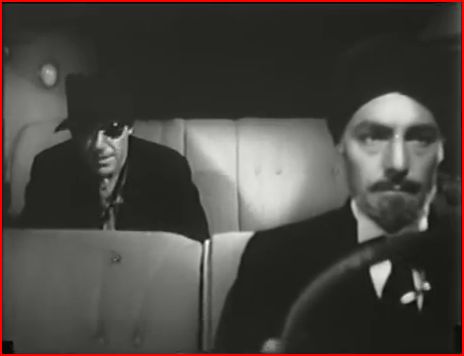
In his civilian identity, criminologist Richard Wentworth is convinced that The Octopus is receiving information from the inner circle of business leaders with whom Wentworth and Police commissioner Kirk regularly consult. To test the hypothesis, he has Kirk invite the men to a dinner at which Wentworth will announce new tools and tactics in the war against The Octopus. Once he relates that a demonstration will take place at the airport, the Octopus's man (we don't see his face) rather blatantly punches holes in a dinner role and has a waiter take it away. The roll is conveyed to a driver outside who recognizes the punch patter as a coded signal directing the Octopus gang to the airport -- where the police are waiting for them. Updated by radio, Wentworth informs the diners that the airport has already been attacked, in vain, but neither he nor Kirk noticed the business with the roll. Still, their task becomes much easier now. Kirk can put tails on all the business leaders rather than flail all over town looking for leads.

The Octopus makes another attempt to draw The Spider into the open, spreading a rumor that his top henchman Steve Harmon (Marc Lawrence) has defected and is on the run. As Blinky McQuade, Wentworth learns where Harmon is holed up. As The Spider, he calls Harmon and negotiates a meeting. Mutual distrust realistically prevails, but each man is willing to take a chance on a meeting in the park. Each also hedges his bets. Wentworth plants a dummy Spider on a bench for Harmon to shoot, while Harmon has men in hiding for when the real Spider shows up -- in a tree. The encounter proves inconclusive as Harmon shoots his way free. Harmon's pretty smart for a serial goon but he doesn't use his head after all this to investigate how The Spider got his number.


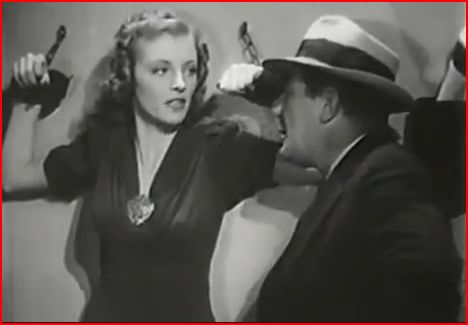
Meanwhile, Kirk recruits Nita Van Sloan, Wentworth's girlfriend and The Spider's henchwoman, to help shadow the business leaders, since she has innate society connections to their circle. The Octopus strikes preemptively, driving Kirk's car off the road and snatching the dazed commissioner. Nita jumps free before the wreck and witnesses the kidnapping. She hops on the running board of the kidnap vehicle, and that's the last we see of her this chapter.


Despite the debacle in the park, the Spider still wants to bring in Harmon, and The Octopus orders the doubtful Harmon to arrange another meeting, albeit with plenty of backup. Harmon is now to meet The Spider on a double-decker bus in broad daylight. In one of the serial's most ambitious stunts. The Spider makes the meeting by swinging from the roof of a fairly tall building onto the open top of the bus. Unfortunately, from there we cut to Marc Lawrence and a stuntman fighting on an immobile bus against a process shot. It's a fairly elaborate set-up that involves a car driving alongside the bus, into which The Spider tosses Harmon before diving on board himself. Harmon fights for control of the car but only manages to drive himself, The Spider and the hapless driver into the ocean, ending an eventful chapter that has more than one cliffhanger if you also count what's become of Kirk and Nita. The Spider will survive, of course, but come back next time to see if this was Steve Harmon's last stand.

Sunday, September 18, 2016

Serial Pulp: THE SPIDER'S WEB (1938), Chapter 7: Shadows of the Night

After an inexcusable delay we return to the cinematic exploits of Richard Wentworth, Norvell Page's epic pulp crimefighter better known as The Spider. Regular and patient readers will recall that this Columbia serial pits Wentworth against The Octopus, a masked supercriminal with a possibly fake limp who seeks control of the nation's utilities through terrorist means. We last saw Wentworth in costume brawling in an open car with minions of The Octopus until the car plowed into an electrified transformer fence. What you didn't see last time was Wentworth diving out of the car to avoid electrocution. Before leaving the scene, The Spider makes sure to leave his brand on one of the corpses in the car.

The gangsters want to kill Johnny, the newsboy introduced last episode who can identify one of the gang believed dead. They create a traffic distraction while three of them head for Johnny's apartment. Seeing this, Wentworth quick-changes in his car and prepares to go into masked action in broad daylight. Questioned on this by Ram Singh, Wentworth explains: "Warrior, when immediate action is necessary the police are too handicapped by rules and regulations; therefore The Spider must strike at once." He goes up a fire escape, frightening one of Johnny's neighbors, and comes in through the window to surprise the would-be kidnappers. He shoots one and grabs another while the third flees without Johnny. A cop alerted by the neighbors screams comes up the fire escape to get The Spider. Our hero was going to interrogate the gangster he captured, but the wrongdoer is more useful now as a human shield, soaking up the cop's bullets. The Spider dashes away, quickly doffs cape and mask, and in mufti bursts in on the cop begging for protection from the pursuing Spider. The cops shove him out of the way, not noticing the suspicious bundle of clothes he's carrying. Wentworth might have mentioned to Ram Singh that The Spider's services are necessary because cops are dumb, but perhaps that would have been belaboring the obvious.


Soon afterward, Wentworth and Ram go back to the garage they know to be an Octopus base and walk into an impromptu trap set by the star henchman (Marc Lawrence). I'd given this guy credit for quick-thinking earlier but I take it all back now. He has Wentworth and Ram Singh in his power and orders them into a car for delivery to The Octopus. He searches Ram Singh and claims one of the Sikh's throwing knives, but doesn't bother searching Wentworth. He sends them into the car, but our heroes promptly go out the other door, giving themselves cover as Wentworth pulls out his pistol and opens fire on the gang. Jackson, another of Wentworth's assistants, moves in and puts the gangsters in a crossfire. They take out one of them and get some info on maps and banks out of him before he expires.


It might have been better not to tell The Octopus about this debacle, but someone did and now the big man is ticked off. He chooses to blame the people he assigned to watch Wentworth, who lost him before he went to the garage. He singles out a specific whining gangster for death by belly gun before moving out with his new plan.


The good guys know that The Octopus wants to rob a bank, but there are a lot of banks in town. Where to start looking? Fortunately, the villain makes things easier for the crimefighters by having his minions go crazy in the streets, smashing fire hydrants with their cars all over town. By process of elimination, Wentworth deduces that they'll hit a bank in a district where they haven't been wrecking hydrants. It then becomes easy to single out the targeted bank and rewire its alarm system. The Octopus apparently has sent his men to rob a bank owned by another supervillain. Its alarm system includes a battery of clearly labeled tear-gas bombs installed in the ceiling, and an electrified gate.

The situation deteriorates rapidly for the robbers, and on top of that The Spider shows up with guns blazing. Inevitably, though, our hero gets clumsy and lets a gangster bop him in the back of the head. Down he goes as the would-be robbers make their getaway, just as the electrified gate is about to close on the helpless Spider. And as usual Columbia throws all suspense off the cliff by telling us what Wentworth will be up to in the next chapter. I'll save those details for next time, if you don't mind.

Saturday, August 13, 2016

Serial Pulp: THE SPIDER'S WEB (1938), Chapter Six: Sealed Lips

The Octopus's gangsters (led by Marc Lawrence) already think they've killed criminologist and amateur magician Richard Wentworth and are trying to take out The Spider with a falling spotlight as this chapter opens. Of course, Wentworth's (and The Spider's) lovely assistant Nita Van Sloan gives a timely scream to signal that The Spider should step out of the falling object's way. The thwarted gangsters make a fighting retreat, convinced that they were at least half successful until they see Wentworth walk out of the bus station turned theater. As Nita had explained earlier to the benefit organizers, the gangsters had shot at a projected image of Wentworth, apparently lacking any depth perception to help them detect the trick. To account for his absence during the mayhem, Wentworth claims that the gangsters had knocked him out and left him in his dressing room. No one finds this odd, considering that the gangsters had tried to kill him earlier. But never mind. My favorite thing about this whole scene is how baffled the organizers are by Nita's explanation of the projection trick. Should I explain in more detail how it worked? she asks. Cut to The Spider skulking outside. Back to Nita: "Now do you understand?" They may not, but they're not going to admit it.

The Octopus is strangely forgiving of this latest failure, given how casually he's killed failures earlier. A great general takes minor setbacks into account, he says before moving on to his next project: payroll robberies. Again in a peculiarly chipper mood, he promises big bonuses should the caper succeed. He has reason to be confident this time since he's got an inside man -- a woman, actually, -- at the bank. This receptionist can tap into executive calls to find out when money is arriving or departing. She then passes notes to The Octopus's man. Meanwhile, Wentworth has had the benefit tickets purchased by the gangsters checked for prints. One set matches a police file that gives Wentworth a name to work with. As Blinky McQuade, he finds this man to give him a tip that the police are going to tap his phones. Wentworth expects him to call his boss right away to stop all calls to this phone, and he's planted his minion Jackson in the place as a drunk to get the number. We've already seen Jackson display a now-obsolete talent for listening as someone dials a number on a rotary phone. He can identify each digit in the number by the time it takes the rotary dial to circle back into place. Once the crook finishes dialing, Jackson attacks him and knocks him out. Blinky reappears, now speaking with Wentworth's voice, to call the cops for a trace on the number, which turns out to be the Commerce Bank where that receptionist works.


We've already met the receptionist. During the chase as the gangsters fled the bus station, their car clipped a newsboy and knocked him down in the middle of the street. Wentworth stops his car to help the lad, and the boy's older sister ends up being the crooked receptionist. After snooping on her method for relaying info to the Octopus, Wentworth and Nita snatch her off the street, Wentworth using the same finger-in-the-back technique that Blinky used on a cop a few chapters ago.


When Wentworth threatens the third degree, the receptionist faints. Since fainting is a girly thing, Richard asks Nita to verify that the girl isn't shamming. No she isn't, it turns out; the poor thing is scared to death and Wentworth didn't even have to put on his Spider outfit. Needless to say, the receptionist is a good girl at heart who was embroiled in a wiretapping scheme some time ago that left her subject to a gangster's blackmail. It looks like she and her Wentworth-idolizing brother are going to stick around as supporting players for a while, whether we like it or not.


Meanwhile, The Octopus's men pull off the robbery but the gangster who'd been blackmailing the receptionist is killed in a shootout. That hard-luck newsboy is practically trampled by a fleeing gunman, but recognizes the man as a nearby garage worker. Wentworth is exultant at an apparent big break and gathers Jackson and Ram Singh for a stakeout of the garage. They find some gangsters driving away, apparently to deliver the bank loot someplace. The good guys follow but are eventually made by the suspicious gangsters, who start firing bullets and lobbing grenades at the pursuing vehicle. Wentworth changes to The Spider and prepares for a car-to-car attack. There's one long shot shot of the car stunt shot on location, but most of the action in both cars is done with process shots. The gangster car goes out of control once The Spider jumps on board and crashes into an electrified power-plant fence for our cliffhanger. This episode again shows the above-average competence of the Octopus gang, since they score another win with the bank robbery, and despite plenty of action the focus this time is more on detective work. The episode is slowed a bit by the need to introduce two possibly major new characters but it's still pretty good. If you're really worried about The Spider's fate, we'll have the answer for you sometime next week.

Tuesday, July 26, 2016

Serial Pulp: THE SPIDER'S WEB (1938), Chapter Five: Shoot to Kill

Nearly all our heroes were in peril at the end of the previous chapter. The Spider himself was trapped in a room with a gas bomb and killing steam, while Nita, Jackson and Ram Singh were shackled inside the archetypal flooding room. The first cliffhanger is hurdled easily as The Spider simply forces his way out a window. Meanwhile, The Octopus taunts the others via intercom, while Ram Singh vows to carve his name in the villain's heart. The Spider goes back into the trap house and takes out the goons operating the radio and speakers. He somehow figures out that his friends are in danger and pries open the airtight door to the flood room, clobbering two foes with the rush of water while he discreetly hops on top of a chair. After he frees his friends, Ram Singh notices that the two gangsters are coming to. Something violent is cut from the picture here, at least in the version I saw, for we now see The Spider and Ram Singh approaching the camera, and then we see the gangsters' bodies twitch and go limp.


The Octopus is royally pissed at his men's latest failure to kill Richard Wentworth and his friends. ??, as the actor playing The Octopus is known for now, knows how to work his full-face mask to make it express his rage. He puts his long-term plans to dominate American utilities on hold for the moment to make destroying The Spider priority number one.


Learning through his underworld sources (i.e. Blinky McQuade's) that everyone's out to get The Spider, Wentworth switches up. His plan is to make a public spectacle of himself at a charity magic show in order to draw out The Octopus's men, if not The Octopus himself. He seems awfully confident that the bad guys will attempt some surgical strike on himself instead of bombing the bus station (i.e. the set from the chapter-one cliffhanger) where the charity show will take place. The Octopus takes the bait but complicates things a little by issuing a threat to Wentworth in The Spider's name.


The Octopus's idea is that the bogus threat will draw the actual Spider to the scene, where he can then eliminate both his enemies at once. He still doesn't realize how easy that would be, but I'm not sure of the soundness of his plan.  Why wouldn't The Spider, presuming he was someone other than Wentworth -- as The Octopus must presume so far -- simply stay away on the assumption that the charity show will now be heavily guarded? For the plan to work, this theoretical Spider must assume that someone, presumably an enemy of his, actually will go after Wentworth. Of course, this criticism is moot because The Spider can't help but be there is Wentworth is. The funny part is that no one -- the press, the police and, of course, Wentworth, takes the fake threat seriously. Sending threats to the newspapers isn't The Spider's M.O., and as Wentworth asks, what would The Spider have against him. Wentworth's a crime fighter in his own right, after all, while The Spider, in Wentworth's words, is "a perfectly nice sort of fellow ... who goes around punishing people the law doesn't have time to catch up with." Wentworth's chat with Commissioner Kirk allows the latter to air anew his suspicions about Wentworth being The Spider, since Ram Singh had left his turban, lost when the bad guys clobbered him in the previous chapter, in the trap house which the cops found littered with corpses marked with The Spider's brand. Ram Singh, after all, is the only man in the entire city who wears a turban, isn't he?

 Does this make Nita Van Sloan a costumed crimefighter in her own right?

In any event, it's on with the show despite the dubious threat. Wentworth arranges to have the more suspicious spectators herded to one section of the makeshift theater, but The Octopus's chief goon (Marc Lawrence) recognizes the set-up and orders a cohort to head over to where a spotlight has been set up. The gangster sneaks up there and kayoes the lighting man, all unbeknownst to the security detail. They're the same people who let Lawrence into the bus station with a loaded gun, despite the publicized (albeit mocked) threat to Wentworth's life. Nita takes the stage in costume to introduce Wentworth, who immediately draws fire from Lawrence. Wentworth seems unhurt, almost as if the bullets hit a force-field. Why didn't they just blow the place up? That's what a real Norvell Page villain would do. Now The Spider appears, faster than the quickest change would make possible, to open fire on the gangsters. But now the wisdom of Lawrence's tactics becomes apparent, because The Spider has maneuvered himself into the perfect position for that goon up above to drop that spotlight on him. Thus ends a relatively uneventful chapter dominated by The Spider and Octopus trying to outwit each other. You still get the sense that The Octopus is somewhat more dangerous than the typical serial villain, but he clearly wasn't at his best this time. Let's wish him better luck next time, since The Spider's Web isn't even halfway done yet.

Tuesday, July 19, 2016

Serial Pulp: THE SPIDER'S WEB (1938), Chapter Four: Surrender or Die!

At the end of Chapter Three of this Columbia Pictures adaptation of Norvell Page's pulp hero, Richard Wentworth was knocked into a mean looking power-plant thingy that turned explosive on impact. At the opening of this chapter, after the narrator's usual long-winded recap -- he has to talk over all the footage from last week's climax -- Wentworth, aka The Spider, simply gets better and gets out of Dodge when the cops show to disrupt The Octopus's plan to black out the city. By now, Wentworth has figured out that The Octopus is no common gangster, but represents "organized crime with more than money as a goal. He wants control." He specifically wants control of utilities, having first muscled into transportation and more recently targeted electrical power. That The Octopus is engaged in "terrorism" rather than mere crime is in keeping with the apocalyptic tone of the Popular Publications pulps, though whether the villain can keep escalating his attacks like his print counterparts remains to be seen.


Out of nowhere Wentworth gets a potentially important lead from a young friend of his, the gas station operator and ham radio enthusiast Charlie Dennis. In The Spider's day a ham radio operator was as close as you could get to a computer hacker today, and Charlie has inadvertently hacked into the Herzen Band, a frequency outside the range of most radios on which the gas jockey is picking up inscrutable, apparently coded transmissions. Wentworth transcribes a typical broadcast and has his old war buddy Jackson set about deciphering the code. Charlie has instantly become an important asset for the good guys, but The Octopus's men have detected the hack somehow, and their master orders Charlie eliminated. So we have this episode's plot wrapped up: The Spider will have to save Charlie from the bad guys....except that he doesn't. In fact, Wentworth and his pals are completely clueless about Charlie's imminent doom and make no effort to protect what could have been a crucial source of intelligence on The Octopus's activities. In a flawless victory for the villain, Charlie is murdered and his gas station (and all-important radio) blown up with Wentworth none the wiser.


The main characters never even acknowledge that anything has happened to poor Charlie, though I have to imagine that the Herzen Band will become important again later. To be fair, our heroes have their own security to think about, since The Octopus's goons are still stalking Wentworth. Two of them jump Richard outside his hotel suite. He fights them off but finds that Nita and Jackson, whom he'd left in the suite, have been snatched, the snatchers leaving behind a note telling Richard to expect a message from The Octopus.


The mystery villain has several balls in the air. While trying to outmaneuver Wentworth, he's also plotting to take out all the city's radio stations so he can monopolize the airwaves when making his demands. The broadcast gives Wentworth and Ram Singh a chance to use their triangulation machines to pinpoint the source of the transmission, which they expect to be The Octopus's lair and their friends' prison. Finding the likely spot, they break through an electrified fence and prepare for a two-pronged attack on the building. Despite being warned to be careful, the mighty Ram Singh promptly gets KOd while skulking in the bushes and joins Nita and Jackson in chains in a cell.


This place proves to be some kind of torture house. The cell is rigged to fill with water in order to drown its prisoners.While they thrash about in vain and the water rises, The Spider enters another end of the house and surprises a bunch of gangsters. For some reason he surrenders his advantage of surprise to hunker behind a toppled table, content to trade shots with the surviving goons until one quick-thinking, courageous bad guy closes a door to trap The Spider in a room with a gas bomb. As if that wasn't bad enough, this room is rigged to release a lethal volume of steam. A double cliffhanger closes an episode that has not gone well for the good guys. It's good at holding our interest, however, since it shows The Octopus and his men as more effective serial villains than we typically see. We'll see how long that lasts....

Wednesday, July 13, 2016

Serial Pulp: THE SPIDER'S WEB (1938), Chapter Three: High Voltage

The resolution of last episode's cliffhanger was set up when we saw Richard Wentworth's henchman Ram Singh monitoring the situation in the Adams office as Wentworth, The Spider, prepared to rescue his girlfriend Nita Van Sloan. Once the faithful Sikh saw that The Octopus's men had set a deathtrap for The Spider, he rushed to the building. After the recap, this episode opens with Ram arriving just in time to help fellow flunky Jackson get the mechanical hoist back in control so Nita and The Spider have an easy last leg of their trip to the ground. After seeing Nita off, The Spider re-enters the building to fetch Adams from a vault in order to interrogate him about The Octopus. As he drives away, more minions take up the pursuit. The Spider exhorts Adams to jump from the car before it goes over a cliff, but Adams is no Spider and burns with the vehicle.

Some of Richard Wentworth's victims bear "the mark of The Spider."

Inevitably, The Spider is blamed for the neophyte traction magnate's murder, provoking a hissy fit from Wentworth."All because a few thugs are killed, the cry goes up: Get the Spider!" he complains, "Every time The Spider strikes, all they see is the act. Never a thought for the real reason behind it." Wentworth is more thin-skinned a crimefighter than The Green Hornet, for instance, who wants to be thought of as a criminal, since that makes it easier for him to move through the underworld. But pity party over, it's back to work. "I've got to find the Octopus, and destroy him," our hero resolves.

Civilian life is no shelter for Richard Wentworth as it is for other costumed crimefighters. Since Wentworth himself is known as a criminologist who gets involved in prominent cases, he is just as much a target out of costume as The Spider is. The Octopus has known since the last chapter that Wentworth is an enemy, so he has the Wentworth house staked out, with gunsels waiting to blast Wentworth the moment he steps outside. Fortunately for our team, The Octopus's minions are idiots. Richard dodges them by ordering a bouquet of "special flowers" for Nita from a friendly, confidential florist. The delivery made, Wentworth swaps clothes with the delivery man and marches out to the delivery truck, a leftover bouquet obscuring his face as the bored gunsels watch. "This is a useless job," one reflects, but if this serial teaches us anything it's that there are no useless jobs, only useless people.


Wentworth puts on his Blinky McQuade disguise to seek out a gangster he'd recognized among the men in Adams' office. Blinky, the one-eyed safecracker, will be hard up and looking for any kind of job Frank Martin can give him. McQuade is perhaps the most likable gangster you'll ever meet, and Martin gladly lets him in on a warehouse job his gang is pulling on their own. If that goes well, Martin may use him on an Octopus job. Martin says Blinky can be trusted not to blab about things, but you'd think he'd wonder after the cops show up in the middle of the warehouse job. To be fair, it isn't clear if Wentworth called in a tip once Blinky found out where the job was, and in any event a wounded Martin is too grateful to think too much about things after Blinky rescues him from arrest by sticking up a cop with his finger.


Once Martin tells him what the Octopus has lined up -- a raid on a power plant in an effort to black out the city -- Blinky arranges to have Jackson show up at his hideout in a cop costume  to take him in for questioning. "The Octopus ordered this job done so there wouldn't be a light left on in the city," a gangster helpfully explains to the audience and the men gathered not at all conspicuously or suspiciously outside the Power & Light company. The Spider shows up, guns blazing, to break up the sabotage, but has the bad luck to get socked into a great big spark-emitting machine to end the episode. Of course, Columbia spoils the cliffhanger by telling us immediately what Wentworth will be up to next time, but I suppose if you knew going in that there would be fifteen chapters you could guess that the hero wouldn't get whacked in Episode Three. It makes you wonder why serial studios bothered with cliffhangers. If you think about it, take away the cliffhangers and instead of Saturday afternoon serials you have the modern short-form TV season -- except now you can watch any episode of some shows and really believe a hero might die.


To be continued...

Saturday, July 9, 2016

Serial Pulp: THE SPIDER'S WEB (1938), Chapter Two: Death Below

We left Richard Wentworth, aka The Spider, attempting to drive a truck loaded with explosives away from a bus depot. The first chapter of the Columbia Pictures serial based on Popular Publications' pulp crimefighter ended with the truck blowing up, but chapter two opens (after the obligatory recap, heavy with narration) with an easy cheat: our hero simply dived out the opposite door of the truck before it blew. After dealing with The Octopus's men, The Spider now has to dodge the police who consider him a criminal. He carjacks someone and hops from the moving vehicle into Ram Singh's getaway car some safe distance from the cops.

The Spider then calls in a tip telling Police Commissioner Kirk to raid the Octopus hideout where Wentworth had been imprisoned briefly last episode. Wentworth himself shows up just before the raid and manages to lead his friend Kirk into a deathtrap. The doors and windows lock just after someone tosses in a gas bomb to kill the crimefighters. Wentworth figures that short-circuiting the room by shooting a light-switch will unlock the window, and he and Kirk take the fire escape out.

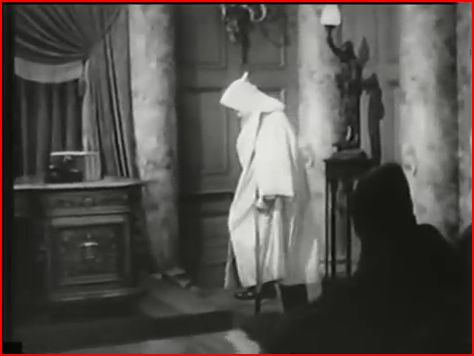
After things have calmed down, Wentworth checks in at the commissioner's office, where he's meeting with an impatient committee of businessmen who want results from the hunt for the mastermind terrorizing transportation, whose name remains unknown to the good guys. While all these people are big businessmen, they missed one detail in the business news section of the newspaper that Wentworth reads: J. R. Adams, an unknown in the business world, has been named the new head of the Roberts Bus Line, Roberts having been murdered last chapter. Wentworth figures that Adams is either the head terrorist himself or one of his stooges. After asking the businessmen to leave the office, Wentworth discusses his plans for dealing with Adams in detail with the commissioner. Right away, we see The Octopus tell his hooded minions that he expects Wentworth to make a move on Adams and will make plans to deal with Wentworth. This seems like a tip-off that The Octopus -- as you'll recall, we see him as a bulky, limping figure in white robes, hood and mask and hear him through a distorting speaker system -- is one of the big businessmen, or else in cahoots with one of them.

Wentworth isn't satisfied with bugging Adams' office. He and his minion Jackson infiltrate the place as telephone men, and while Wentworth attempts to distract the secretary -- on screen it looks like he's doing a poor job -- Jackson inconspicuously installs a television camera hidden inside a book. By "inconspicuously," I mean that Jackson shows the movie camera the camera embedded in the book, then opens the book to show us all the machinery inside, while we take it on faith that the secretary hasn't noticed any of this.


Back at chez Wentworth, Richard, Jackson and Ram Singh turn out the lights in their TV room to watch the J. R. Adams show, after the set takes a minute to warm up. Right away someone asks Adams what the latest orders are, but he doesn't know apart. However, Wentworth now knows he's dealing with The Octopus, who checks in via intercom soon enough to explain conveniently that he intends to take over "certain industries," warn Adams about Wentworth, and provide some protection in the form of a hostage: Nita Van Sloan fresh from the hospital and still in her aviatrix outfit from chapter one. Wentworth and the boys freak out at the sight and Ram Singh is ready to kill, but you'll notice that Nita takes it all like a trouper, showing neither fear nor any other emotion, very much like an actress who's been given no direction whatsoever in the scene.


Jackson delivers The Spider to the Adams building, where our hero hops on a mechanical hoist so Jackson can send him straight up to the villain's floor. There's a hint of pulp flair to the shot of The Spider poised on the chain outside a window, his cape billowing more dramatically (if not necessarily more manageably) than Batman's in the same studio's infamous 1943 serial. Entering through the window, he kills a guard by knocking him into an electrified doorknob and prepares to enter Adams's office. Inside, Adams's goons are prepared to blast whoever comes through the door, or else blast the still-impassive Nita. The Spider enters, using the dead guard as a human shield. The goons are so shocked by this atrocity that Nita nimbly steps out of the kill box while her enemies stare helplessly. The Spider forces the bad guys to lock themselves in a vault, but he and Nita still have to dodge goons coming upstairs. Out the window they go so they can ride earthward on the hoist, but when Jackson has to fight another goon the hoist slips out of control and Spita (to make a ship of it) begin to plunge at deadly speed, and now Nita screams....


This episode left me wondering what purpose poor Adams was supposed to serve. Obviously he was only going to be a front for The Octopus, but was he appointed only to get Wentworth's attention with his obvious lack of credentials? As for The Octopus, what exactly was his plan to deal with Wentworth? Was it simply to retain Nita as a hostage in case Wentworth showed up, or did he know about the hidden camera after all and had her paraded in front of the camera to draw Wentworth back to the building and its feeble trap? Whatever you make of it, it seems like a waste of his time to focus on Wentworth when he should be consolidating his gains from last episode, but that's serial logic for you. Maybe our villain will have something better to do in chapter three, "High Voltage," coming soon to this blog.

Wednesday, July 6, 2016

Serial Pulp: THE SPIDER'S WEB (1938), Chapter One: Night of Terror

For some people, pulp fiction is embodied by crimefighting heroes like Doc Savage and The Shadow. They're the two best known of a generation of pulp heroes that flourished in the 1930s, before and during the advent of comic book superheroes. One of their peers was The Spider, "Master of Men," who was published by Popular Publications, while the big two were put out by Street & Smith. Among the most popular hero pulps, The Spider was the first to be made into a movie serial, not long after The Shadow had made his unsuccessful feature-film debut. In pulp, The Spider's adventures were written mostly by Norvell W. Page, using the Grant Stockbridge pseudonym. I find Page the best of the hero-pulp writers, the master of the often overwrought Walter Gibson (who wrote The Shadow as Maxwell Grant) and the often clumsy Lester Dent (who wrote Doc Savage as Kenneth Roberson). Page could paint a word picture of dramatic if not fantastic action better than his rivals, and his apocalyptic imagination makes The Spider resonate with modern readers in ways his rivals can't match. Of course, what Page wrote might be called "destruction porn" today, because The Spider's enemies don't play around. They're usually terrorists of some sort rather than mere gangsters, for whom mass destruction is the way to power or the way to wealth through mass extortion. Cities were devastated and civilians slaughtered before the Spider meted out justice to the guilty; like comic-book heroes today, The Spider wasn't very good at preventing mayhem. He was better at assuring that people didn't get away with it. Richard Wentworth was The Spider, but unlike the Zorro-Batman archetype, Wentworth also fought crime in his civilian identity as an amateur criminologist and often spent large portions of Spider stories doing so out of disguise. Wentworth had a modest support team consisting of his chauffeur Jackson, his butler Jenkins, his all-around man friday Ram Singh and his fiancee Nita Van Sloan. No relation to Edward the actor, Nita often bemoans the apparent fact that Richard's costumed career prevents them from marrying -- presumably since it would be impracticable for them to have children -- but for all intents and purposes she embraces his lifestyle to the point of pinch-hitting as The Spider on occasion. She may not have the same sort of training Richard and his other helpers have, but a machine gun is often a great equalizer and she can use one with relish. Rounding out the regular cast is Police Commissioner Kirkpatrick, a friend of Wentworth who suspects him of being The Spider, whom he'd have to arrest as a killer vigilante, but never can prove the dual identity.


Serials notoriously wrought havoc on comic-book heroes, altering origins and other details to suit often unclear purposes. By comparison, at least on the evidence of Chapter One, The Spider's Web is fairly faithful to its pulp source. Its major innovation is the costume The Spider (Warren Hull) wears. While the pulp character often scurried through the city in a fright wig and makeup to scarify criminals, he was shown on the magazine covers in more debonair garb and a modest domino mask. The cinematic Spider wears a full face mask with a spiderweb pattern matching that of his cape. He has his full supporting cast, though the police commish's name has been shortened arbitrarily to Kirk. Nita (Iris Meredith) makes a good first impression as co-pilot of Wentworth's private plane as they're returning home from some vacation. She actually expects to be married, since Richard has resolved to give up being The Spider. An attempt to sabotage their landing soon changes his mind, and Nita takes the disappointment like a good sport.


The sabotage was perpetrated by minions of The Octopus (??? in Chapter One), who sees Wentworth the criminologist as an obstacle to his plan to control all transportation and thus apply a stranglehold to the entire national economy. The Octopus is a classic serial mystery villain, someone whose identity under his white hood we'll be invited to guess over the remaining chapters. He walks with a limp, afflicted with a shriveled leg that's almost certainly a bit of misdirection. He speaks into a microphone and his voice is amplified (and distorted, no doubt) by speakers in his office, where black-hooded minions report and await orders.


Like the typical Spider villain, The Octopus takes no prisoners; at the climax of Chapter One he plots to blow up a bus depot, but The Spider manages to evacuate the place simply by showing up and terrorizing commuters with his presence. In case that didn't suffice, he and Ram Singh (future Ed Wood collaborator Kenne "Kenneth" Duncan, playing the man from India with no hint of an accent) have a gunfight with the Octopus's gang, including -- it's my guess since he isn't credited -- a very young John Dehner. The bomb is on a bus that The Spider tries to drive a safe distance from the building and any civilians, but he doesn't get the thing a safe distance from himself. Of course, then as now, the teaser for the next episode assures us, as if serial audiences needed such assurance, that Richard Wentworth will survive to face new crises next week.


The Spider's Web intends to highlight Richard Wentworth as a master of disguise. In the opening credits Warren Hull is introduced thrice over, as Wentworth, The Spider, and his one-eyed underworld alias Blinky McQuade. Wentworth also briefly amuses Nita with a vaudevillian Chinaman bit. While Wentworth is shown to be a quick-change artist, Hull will depend on his vocal versatility to put over his different guises. He has a charming moment in this chapter while changing into Blinky when he has a little conversation between two of his personalities. If people thought the Spider one of the nuttier pulp heroes, that moment won't dissuade them, but it does give the hero more character than the typical serial protagonist. Hull may not have the authentic Spider's cold fury, but he makes a likable action hero and, to be fair, this story is just getting started. Stay tuned for more chapters through the month of July, or get ahead of the game by watching the serial yourself at the Internet Archive.