Sunday, March 10, 2013

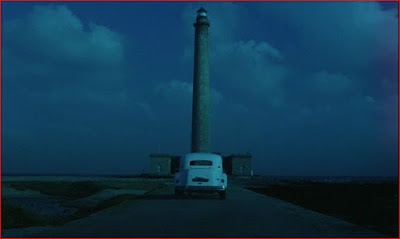
VERONIKA VOSS (Die Sehnsucht von..., 1982)

Rainer Werner Fassbinder aspired to be a cinematic Balzac for the Federal Republic of Germany -- better known in America as West Germany and known to its own citizens as the BRD (Bundesrepublik Deutschland). He had drive and he had youth, but by the time he got busy with the project it was already just about too late. With a huge output already behind him, he made three films that stand as the "BRD Trilogy" following Fassbinder's drug-related death a few months (he was only 37) after the release of Veronika Voss, chronologically the second film of the three. The BRD films portray a Germany on the make as the capitalist part of the divided nation rebuilds under American occupation after World War II. Fassbinder sees corruption in all the deal making and related betrayals attendant on the BRD's "economic miracle," and he sees this quite overtly through the lens of classic cinema, both German and American. In the most obvious case, BRD 3, the second film released, is Lola, Fassbinder's riff on Josef von Sternberg's The Blue Angel, with a new generation of degeneracy breaking the pride of a self-righteous bureaucrat. But BRD 1, The Marriage of Maria Braun, can be seen almost as plausibly as a riff on Gone With the Wind, with the title character as a West German Scarlett O'Hara ruthlessly adapting to a newly commercialized environment. In turn, while Veronika Voss is based partly on the sordid end of an actual German film actress, it's also self-consciously evocative of Sunset Blvd. -- inevitably, given the subject matter. But that's just the tip of the picture's evocative iceberg.


Will Veronika Voss be ready for her close-up? Watch Die Sehnsucht and find out!


Veronika Voss (Rosel Zech) is as self-delusional as Norma Desmond, but not as much as a menace in her own right. Popular during the Hitler years, she wasn't exactly purged from the film industry, but she hasn't worked in thee years as our story opens. While most sources date events in 1955, the playing of Johnny Horton's Battle of New Orleans during the movie would be an anachronism unless the story took place in 1959 or after -- but here ends the pedantry. Voss gets caught in the rain returning from a screening of one of her films and finds a samaritan in Robert Krohn (Hilmar Thate), a sportswriter with an umbrella. He doesn't recognize her initially, while she sees him as a new lover, a mark, or both. At a subsequent lunch meeting, she borrows 300 marks to buy a brooch she simply must have, then returns the brooch to the store and pockets the money. But it's not as if she lacks for money. The problem is that she doesn't have control of it. As an increasingly obsessed Robert learns, Voss is under the control of Dr. Katz (Annemarie Dueringer), the instrument of control being morphine. Katz is a figure out of film noir -- think of malicious female doctors in films like The Uninvited, Nightmare Alley, etc, though her clinic is ironically a white-on-white wonder of production design. One of the few notes of darkness is the archetypal African-American soldier played by Guenther Kaufmann (under different character names) in all three BRD films. In Voss the soldier seems to live in Katz's clinic and goes about his business in blissful, near-total ignorance of the plot, though his presence may be meant to make a point about the American occupation in general. Cinematographer Xaver Schwarzenberger makes the most of the opportunities this set offers; his work in black-and-white here rivals his lurid color photography of Lola the previous year. The overall art direction adds a layer of expressionism to the story's noir tropes, and as the film evolves into a they-won't-believe-me thriller, with Robert desperately attempting to expose Katz's racket and putting both Voss and his girlfriend (Cornelia Froboess) in mortal peril, the layers of cinema history peel away until at the heart, arguably, you find The Cabinet of Dr. Caligari, with Katz as the evil keeper of the asylum and Voss the hapless somnambulist, a seductress rather than a killer.


In the white room


On some level, the BRD films seem like an attempted synthesis, or at least a dialectic mashup of Hollywood and Weimar tropes, but when the trilogy is done you're left wondering how Fassbinder's movie-archetype approach enhances our understanding of social and cultural trends that he apparently deplores. On a satirical level he seems to be saying that West Germany was repeating the stories cinema has already told, Lola in particular looking like a tragedy repeated as farce. But what came first? The decision to chronicle the BRD with movie archetypes or the decision that the BDR was reliving them? Fassbinder's strategy could well be dismissed as a too-easy substitute for the novelistic analysis his Balzacian ambition required. But if his intention was no more than satire, the trilogy can stand with the great cinematic satires, even if Veronika Voss draws very few chuckles. The safest approach is to acknowledge that the BRD series never took its intended or naturally evolved form and to respect the surviving building blocks as part of Fassbinder's cinematic monument.

Saturday, March 9, 2013

Pre-Code Parade: PANAMA FLO (1932)

Charles Bickford's star was already slipping by the time this RKO Pathe picture directed by Ralph Murphy appeared early in 1932. Although he's once again the male lead, he's third billed behind star Helen Twelvetrees and antagonist Robert Armstrong. As in Bickford's earlier film The Sea Bat, his character gets the heroine on the rebound. This time Flo (Twelvetrees) is a chorus girl whose troupe, obviously blessed with the world's worst agent, is stuck in a Panama dive without funds to return home. The husky proprietress invites the showgirls to work for her, but Flo finds a sugar daddy of a sort in Armstrong's pilot, though her pride prevents her from taking money from him when he goes on a short expedition. The expedition proves not so short, and soon enough Flo is trained in the art of rolling drunks with big bankrolls. Dan McTeague (Bickford) gets good and drunk but knows a Mickey Finn when he sees one. By then, however, Flo has replaced his roll with a wad of rags, which she's handed off to her roommate. Once McTeague (shades of Greed!) realizes what's up, he nearly tears the joint apart until Flo confesses that the roommate has his roll at their apartment. In a nice sequence of tracking shots, McTeague drags Flo through the slummy streets to the flat, only to find that the roommate has absconded with the whole roll -- we see her boarding a ship and exiting the picture. Flo persuades Dan that nothing he might do to her will get his money back, so he makes him an offer: she can work off her debt as his servant on his South American plantation. Turns out that McTeague is an entrepreneurial geologist, convinced that he's discovered a massive oil deposit that once tapped will make him "King of South America." He makes little progress, however, his biggest accomplishment being the pile of broken bottles outside his window. Meanwhile, Flo has to deal with Dan's unwanted amorous attentions and the jealousy of the native girl she's replaced in his household. She has to hold Dan at bay with a gun for a time, but suddenly a plane appears above the plantation, coming in for an emergency landing.

Wouldn't you know it? It's Babe (Armstrong), whose unexpected appearance fills Flo with hopes of salvation. Somehow Babe learned that Flo was down here and he promises to rescue her once his fake repair work on the plane gets McTeague to let his guard down. For the moment Dan only sees a potential rival, not knowing Babe's identity but dimly remembering his face -- we remember that he saw Babe's photo in Flo's Panama apartment. Dan doesn't know the full nature of the threat, and neither does Flo until she finds Babe greedily going over Dan's notes. Babe knows enough to see that Dan's guess about the oil is right, and figures with his plane he can jump whatever claim Dan has to the land in question. This is a side to the doughy, weak-voiced Babe that Flo hasn't seen before. Remembering how she'd initially wronged Dan, she can't condone stealing from him. "Anyone smart enough to walk off with a million bucks is no crook," Babe corrects her, "He's a financier." But Flo is unswayed. She's willing to pull a gun on her erstwhile savior to keep him from robbing Dan. When Babe throws a chair at her, she's willing to fire that gun....

Panama Flo is told in the form of a flashback, and the framing story, which has Dan re-encountering Flo in a New York tavern, finally sinks the picture. Flo had fled guiltily after the shooting, but Dan tracks her down to pull a Liberty Valance on her, explaining that his shot, not hers, had felled Babe. The story now rushes from tragedy to farce as Dan tells Flo that his investments haven't panned out. Flo sneeringly tells him that hers have, pointing to a limo parked across the street as proof. She proudly makes her exit, crosses the street, and begs the driver to take her around the block, just for a gag. Nothing doing -- and we soon learn why. After Flo stalks off, Dan saunters up to the same car and driver -- they're his, after all -- instructing the latter to follow that girl and ending the film on a big huh? I'm guessing that Dan meant to test Flo, not wanting her to throw herself at him because he was now rich, while Flo's was just a show of that stubborn pride that makes Dan love her -- I think. I'm more certain that writer Garrett Fort bit off more melodramatic bs than the actors could chew at the end. Until then, Panama Flo is a mildly interesting look at a virtually unknown director. Ralph Murphy's filmography is an almost complete mystery to me, but he gives the camera a healthy workout here, especially in the Panama scenes. Beside the tracking shots I mentioned he keeps the camera mobile in Flo's apartment to dramatic effect when Flo threatens to throw herself out of an abruptly opened window after Dan threatens to have her thrown into a "hoosegow" filled with filthy drunks. Cinematographer Arthur C. Miller combines with Murphy for some nice proto-noirish effects, particularly a shot of a room illuminated only by a moonlit doorway and the moonlight outlining a brooding Flo as Dan enters. Third-billed he may be, but Bickford's brusque belligerence and his brillo hair dominate the picture, though Twelvetrees ("the Thrill Girl of Millie") holds her own. Overall, Flo has some good Pre-Code moments, but the plot is just a little too twisty for its own good, until the film strangles itself at the end.

Friday, March 8, 2013

Pre-Code Parade: THE SEA BAT (1930)

Now that Turner Classic Movies' annual "31 Days of Oscar" programming is done, the station can get back to the good stuff. The other day TCM devoted a morning of movies to rugged character actor Charles Bickford, who failed (being perhaps too gruff) as a leading man in early talkies but came back to give his most memorable performances from the 1940s forward (A Star is Born, The Big Country, etc.). Naturally TCM focused on the leading-man stuff, including this Wesley Ruggles picture filmed largely on location off the Mexican coast. Sea Bat is a pulpish adventure that reminds me of the extensive reading I've done recently in pulps like Argosy: plenty of camp or pseudo-exotica plus -- what the hell -- a giant monster thrown in. The picture is at pains to explain that "sea bats" are real, though better known zoologically as giant rays. They plague the boats that send divers down to harvest sponges in the Caribbean. One such diver, Carl (Nils Asther) is the beloved of Nina (top-billed Raquel Torres), the daughter of the island's governor. Susceptible to indigenous superstition, as those hot-blooded Latins will be -- she trusts in native charms to keep Carl alive. Pious Carl urges her to trust in the Cross instead. Carl promptly gets killed -- though his diving colleague and romantic rival Juan (John Miljan) has something to do with that. So does the Sea Bat, which sort of lands on Carl while his lines are snagged, before his mates can haul his crushed body back to the surface. This thing is a miniature Moby Dick, the effect being OK for the time and probably spectacular looking at the time. In any event, Nina learns the lesson you might expect from this tragedy and renounces the Christian religion, going almost completely native and dancing in dazed, awkward fashion during their heathenish rituals.

So where's the leading man. At long last Bickford appears in the livery of a minister of the gospel. It looks like we're headed for some Sadie Thompson action until we learn that Sims (Bickford) is an imposter, a wanted criminal on the lam in the islands. The usual complications arise as the locals urge him to perform his sacred duties and reform wayward Nina. Juan and some of the other sailors -- including Gibson (Greed) Gowland and Boris Karloff as a couple of battling grotesques -- have been trying to hit on the girl ever since Carl died. In the Pre-Code Play of the Film, Juan makes his move on the beach. As he grabs Nina by the arm, she reaches across his crotch and slowly draws a knife out of the scabbard on his belt in a manner that could not not be suggestive of giving the man a handjob. She breaks loose and stabs him slightly, but when Gowland and Karloff join the fray she leaps up on a rock as a storm breaks and offers herself to the man who'll kill the Sea Bat. Karloff (playing a "Corsican," not that you could tell) gets killed offscreen trying. Meanwhile, Sims makes a hard-boiled inspection of the native rituals, telling Nina, "I'm trying to decide if this is a jazz cabaret or just a madhouse." Dismissing the natives as "A lot of swine drunk on their own sweat," he advises Nina that "What you need is to have the black magic lashed out of you." It never quite comes to that, however. While Nina merely scoffs at his assumed religion, sacrilegiously kicking dirt on his Bible, Juan grows increasingly convinced that Rev. Sims is someone he knows of shadier background.


Poor "Doris:" Karloff was still a year from winning respect with Frankenstein, and this was but one of the indignities he had to endure while paying his dues.

It looks like an obvious set-up for love to bring both the apostate Nina and the imposter Sims back to the true faith, but at least the Bess Meredyth script doesn't go overboard with the spirituality. What happens is that once the Karloff character dies, Sims is pressed to perform a funeral service. Sims fumbles for appropriate words in his Bible and fortunately finds them, somehow moving Nina, already guilt-stricken over sending Karloff to his death, to repent her savage ways. All that remains is for Sims to win at least a moral victory over the Sea Bat and all ends happily -- except for Juan, of course. The picture as a whole benefits from the extensive location shoot -- an M-G-M specialty of the moment -- acceptable effects and punchy direction from Ruggles, -- who next directed the Oscar-winning Cimarron -- with uncredited help from Lionel Barrymore. It's nothing close to a classic, but Pre-Code buffs ought to enjoy it for its more outrageous moments, and anyone ought to be able to stand it for an hour and a quarter.

Nachthymnen Carcharoth has contributed a clip of the Sea Bat in action.

Wednesday, March 6, 2013

DVR Diary: POSSE FROM HELL (1961)

As a rule I avoid watching films made after 1953 on Encore Western, since the premium cable channel, catering to a demographic presumed not to have upgraded to HD and annoyed by black bars at the top and bottom of their screens, resolutely refuses to show its movies in the letterbox format. But I've had an appetite for western stories recently -- part of a larger appetite for pulpish fiction that may result in something new soon from the Think 3 empire -- and have started recording more of Encore's B and B+ product from the golden era of Hollywood westerns. That brings me to the feature-film debut of Herbert Coleman, who made just one feature more. The real auteur here seems to be screenwriter Clair Huffaker, adapting one of his own novels. Huffaker had a violent, hard-boiled sensibility that takes some of his scripts, particularly 1964's Rio Conchos, right to the border of spaghetti westerns. As a novelist, Huffaker was most inspired in 1958, when he wrote Guns of Rio Conchos, Flaming Lance (filmed by Don Siegel as Flaming Star) and Posse From Hell. The movie of Posse From Hell is an Audie Murphy vehicle, but the war hero, starting his slide from A pictures, is backed by a solid cast of character actors. Murphy plays Banner Cole, a gunfighter called into the misnamed town of Paradise to lead a posse against a gang of vicious hell bastards including Vic Morrow and Lee Van Cleef. Prison escapees, they rode into town, robbed the bank and made good their escape after invading a saloon and taking its denizens hostage. Morrow, the leader, threatens to shoot a hostage every five minutes and proves his point by killing the hostage he'd appointed his spokesman. To hunt down these terrors, Cole ends up with a motley crew he's quick to dismiss as worthless to a man, but over time he distinguishes the wheat from the chaff. The posse includes such stalwarts as Robert Keith (crazy old army man who thinks he can give orders), Royal Dano (desperate uncle of the girl kept by the gang as hostage and later rape victim) and Rudolfo Acosta (intelligent unstereotyped Indian tracker), but the standout of the group is John Saxon as a bank employee recently arrived from the east and assigned by his employer to recover its money. Neither Huffaker nor Saxon overstates the character's greenhorn aspect, that point being made most harshly early when Saxon, after his first ever full day in the saddle, needs alcohol applied to his ravaged rear end. The young actor impresses the most out of the whole cast as someone who starts out just slightly prissy and hesitant yet quickly proves himself willing to learn while acquiring a different set of priorities from his bank employers. The camaraderie among Murphy, Saxon and Acosta -- the posse in its final form after the more dysfunctional members die or quit -- is the best thing about the picture, especially the way the other two take a think-nothing-of-it attitude when Murphy haltingly apologizes for having earlier lumped them with the other losers in the posse.

Coleman was not exactly a visionary director, so I felt I wasn't missing much by having the sometimes setbound picture cropped. Huffaker keeps the story moving and Coleman follows along efficiently enough. Murphy really isn't much of an actor but he plays off the varied character cast effectively within the limited scope of his laconic character. Morrow is so intriguingly mad at the start that it's disappointing that he doesn't get to do much more the rest of the way, but Van Cleef gets a nice death scene, begging for help as Murphy and Saxon pump him for info on his cohorts. The most noteworthy thing about the picture visually is its violence. Men go down hard when shot and their shirts are impressively bloody when we see them close. The degree of brutality doesn't approach the savagery of Rio Conchos or its Italian peers, but it elevates Posse From Hell somewhat above the bland norm for B westerns, as does the sheer number of good actors involved. It's no more than a solid B-western, but that's still better than a lot of far more expensive pictures these days, and anyone with an appetite for unpretentious western action ought to be satisfied for 90 minutes by this one.

Monday, March 4, 2013

DIVA (1981)

It's hard now, after more than thirty years, to see exactly what was new about Jean-Jacques Beineix's feature-film debut. It was treated as a new thing when it first played in the U.S., and I guess it was a phenomenon in France as well. I suppose it seemed to augur a new "New Wave" of cinema to supplant the generation of Godard, Truffaut, et al. It also seemed to tie into a larger cultural New Wave mostly defined by its music, although Diva itself is largely concerned with classical music. The American poster art made a lot of Dominique Pinon's runty punk gangster, making him a sort of new-wave icon for a moment. Now the stonefaced Pinon looks like a junior Terminator as he menaces kids in an arcade, and no one moment in the picture does so much to date it. For the French at least, Diva may be the first true Eighties film, and that may be true globally as well. Since many people regard the cinematic Seventies as a golden age, that reputation may do Diva no favors. But apart from Pinon's dated look the film may be more in than of the Eighties. Its continuities with cinematic tradition, both French and foreign, are more apparent now.

 
Some of the homages must have been obvious from the beginning, particularly the shot of a subway grate blowing a woman's skirt up Monroe-style. But the barefoot flight of a doomed prostitute earlier in the picture seems as much a nod to Kiss Me Deadly as the skirt bit is to The Seven Year Itch. As for the film as a whole, Beineix strikes me as a cross between Jean-Pierre Melville and Jean Rollin. There is a cool yet thrilled approach to crime combined with an obsessive attention to aesthetic detail and a genre sensibility bordering on the gothic.


The story is pulp simple. Jules (Frederic Andrei) has snuck recording equipment into a concert by his idol, the American soprano Cynthia Hawkins (real-life soprano Wilhelmenia Fernandez). This clandestine tape has huge potential value since Hawkins, eccentric in the manner expected from the film's title, has refused to make recordings, not wanting to sing without an audience. In a classic mix-up, Jules ends up carrying another coveted cassette, the recorded confession of the aforementioned doomed prostitute, implicating a high-ranking cop in human trafficking, dumped by her randomly in Jules's bike pack during her last run. Jules knows not what he carries at first, but before long Pinon and his partner in crime are after him, as are the cops who were tracking the prostitute. Jules escapes the latter in the film's most famous scene by riding his moped through a Metro station, and barely evades the former in the arcade despite taking a bullet in the chase leading to the game parlor. Fortunately, he has some eccentric, wealthy and clever artist friends to help him out of his plight....


Beineix has an eye for the eye-catching image, augmented by the cinematography of Philippe Rousselot. It's sometimes arty, sometimes simply captivated by art. The camera will linger on certain objets d'art for no possible dramatic reason, but arguably for thematic balance. If anything distinguishes Diva today, it is the insistent balance Beineix strikes, against the likely expectations of a thriller audience, between the demands of crime and the demands of art. Jules's accidental entanglement in a criminal case is never more than a distraction from his obsession with Cynthia Hawkins and his ultimately innocent desire to present the recording to her as a tribute. That transcendent thread makes his Paris almost a fantasy world, however dangerous. As I said, Melville + Rollin = Beineix, or at least Diva. There's really more Rollin in it, I think, but there's still just enough of the French crime tradition to give the film a needed edge. It may be dated in some ways, and may be stuck in a rut of cinematic history, but despite its Eighties origins Diva retains a certain timeless charm today.

Saturday, March 2, 2013

Now Playing: MARCH 2-4, 1933

Franklin D. Roosevelt was inaugurated into the Presidency on March 4, 1933. His campaign had promised a New Deal for the American people. To coincide with the arrival of that New Deal, Warner Bros. promoted its latest picture (though not in Milwaukee, as you'll see) as "A New Deal in Entertainment." That was truth in advertising.


42nd Street is one of the 1933 pictures that needs no introduction and lives up to its historic reputation. But as it happens, a Milwaukee vaudeville theater was touting its new programming policy as a "New Deal," so promoting this movie that way would have been redundant. Here's what a local reviewer thought of the picture.


The Warner Bros. aren't alone in desiring a new deal in entertainment, but what that might mean depends on who's talking.


On that note, let's retreat to our fantasies on the big screen again.


Buster Crabbe, the future Flash Gordon, is billed here as The Lion Man as an echo of Kathleen Burke's billing as The Panther Woman in the recent Island of Lost Souls. This picture is not to be confused with the Tarzan the Fearless serial Crabbe did at the same time -- a performance that makes Johnny Weissmuller's Tarzan look like a Rhodes Scholar.

Finally, here's some hardcore Pre-Code craziness courtesy of producer Dwain (Maniac) Esper.


This epic has no relation beyond the title to the 1961 weird-noir classic I reviewed a few months ago. Instead, a country boy contracts syphilis in the big city and brings it home to share with his childhood sweetheart.  Aint love grand???

Thursday, February 28, 2013

MAN OF MARBLE (1976) and MAN OF IRON (1981)

In two films director Andrzej Wajda runs the cinematic gamut from arthouse classicism to guerilla filmmaking in a race with accelerating history. Together, the films form a two-generation saga of disillusionment and resistance in Communist Poland. They're parallel stories of a father and son and two chroniclers. In Man of Marble (Czlowiek z Marmuru) we follow student documentarian Agnieszka (Krystyna Janda) in the footsteps of Citizen Kane as she watches old newsreels and interviews survivors to learn whatever happened to a once-famous hero of Polish labor. Her subject is Mateusz Birkut (Jerzy Radziwilowicz), once idolized for setting a record for bricklaying during the construction of the city of Nowa Huta. Birkut is the title character, supposedly immortalized in stone but soon to become an unperson, denounced as a foreign agent and saboteur. As Agnieszka penetrates the veil between film and reality, Wajda shows us some scenes twice. We first see Birkut's bricklaying feat as it was shown on in black and white in theaters: an exemplary story of heroic labor to build the new Poland. The reality, as remembered by living witnesses, is almost Fellini-esque in its absurdity as an audience gathers, a band plays constantly, and an announcer keeps score during the spectacle of bricklaying. The director's also careful to show us Birkut's moments of barely-suppressed annoyance as the newsreel camera gets in his face. Still, Birkut starts as an idealist truly committed to spreading a more efficient method of bricklaying, but everything goes downhill after an odd incident when his hands are burned by a superheated brick during one of his personal appearances. At the lowest point, he shows up during a show trial, in raw footage never shown until Agnieszka screens it, to implicate himself in the incident. Even the authorities find that too ridiculous to believe.


Man of Marble chronicles the sordid demise of whatever socialist idealism actually existed in Poland. The country never seems to have become the totalitarian dystopia of the typical American imagination -- the film, though partly censored, was actually released there -- but something has clearly gone terribly wrong, and may have been wrong from the beginning. If there was an idealism during Birkut's salad days, it was based on some belief that through propaganda people could be made to believe in a Communist future. By Agnieszka's time, you get the impression that nobody really bothers trying to convince anybody. By the time of Man of Iron (Czelowiek z Zelaza), which eventually picks up where Marble left off, it's as if Johnny Friendly's union from On the Waterfront runs the country. It's government by bullying control over jobs and favors rather than the totalitarian brainwashing of Orwellian nightmares. When the authorities decide that Agnieszka can't finish her Birkut documentary, she's reminded that the state paid her way through film school and provided for her in every way, and told that she owes the state loyalty in return, or else they'll make sure she never makes another movie. That's the logic that makes dependence a dirty word in political discourse: if you owe someone something, you can't question them. It shouldn't be so, but people in power tend to think differently. Agnieszka is ruined and eventually jailed.


 Before Wajda re-introduces us to Agnieszka he opens Man of Iron with the misadventures of  Winkel (Marian Opania). Winkel is pretty much Agneiszka's opposite: sloppy, alcoholic, cowardly. He is tasked by his superiors with researching the background of Maciej Tomczak (Radziwilowicz again), a Solidarity leader in Gdansk, for a hatchet-job TV documentary. Winkel is one of cinema's wretches, so abject in his alcoholism (Gdansk has gone dry during the 1980 shipyard strike) that he soaks paper towels with the booze from a broken bottle and squeezes the liquor into a glass to drink. He has no integrity but seems too cowardly to actually betray the independent union. As he conducts his interviews, we're reminded, since we first met Tomczak late in Man of Marble, that the agitator is Birkut's son. We now learn of Birkut's tragic last years. Still recognized as a workers' leader in the shipyard, he refused to lead the workers out in support of student protesters, including his son, during the global tumult of 1968. Two years later it was the workers' turn and Birkut died during a street melee. The government allows his family to bury the body, only to exhume and vanish it later. In protest, Tomczak erects a cross and lights a candle on the site near a bridge where his father fell.


Later, Winkel is snuck into prison to interview Agnieszka, who relates what happened to her since Man of Marble. She'd fallen in love with Tomczak and married him, with no less a personage than Lech Walesa the Solidarity leader (playing himself) as a witness. There's something exhilirating yet almost unseemly about the way Wajda embeds himself and his film in history as it happens. Man of Iron is one part Medium Cool, another part one of those old Mack Sennett one-reelers where he'd set Fatty, Mabel et al loose at some public event. The climax of all this comes when Tomczak is reunited with a liberated Agnieszka at the moment when the government recognizes Solidarity as a legitimate workers' representative. The reunion of the lovers seems to be shot as the historic speech is actually happening. Wajda's apparent freedom of movement is amazing, even considering that 1981 was another moment of dramatic liberalization in Poland until the martial-law declaration of December put Walesa in prison and drove Wajda into exile in western Europe (where he made Danton and other films). Wajda was careful enough not to close Man of Iron on that Capra-esque note of triumph. While the film does end with the lovers walking off together, we first see that Winkel, despite his best intentions, is not redeemed, or at least not forgiven by the victorious union. We also see a bullying party hack warn him, prophetically enough, that the agreement wouldn't stand, that the government had been under duress, etc. Winkel's last scenes strike discordant notes that serve the film well retroactively, but you do wonder why Wajda seems so unforgiving toward his creation. It may have simply been that Opania is so entertainingly wretched that you wouldn't want to change him.


Man of Marble and Man of Iron are historic films from near the front line of dissent inside the Cold War Communist bloc. While Wajda doesn't have a Wellsian pictorial imagination to match the Wellsian ambitions of the first film, both films make the most of dramatic figures in the drably epic landscapes of Gdansk and Nowa Huta. An optimistic romanticism surges to the surface by the climax of Man of Iron that almost requires the last Winkel scenes as a corrective. The contrast between Winkel and Agnieszka itself belies much of the rhetoric against totalitarian power; neither is purely a creature of state-controlled upbringing, since otherwise they'd be more alike. Character matters, in life and in art, and Wajda's commitment to character over ideology makes his diptych more richly realistic and more morally meaningful. These are anti-Communist films (capital C, please) that aren't simply arguments for free-market capitalism -- the heroes of the sequel, after all, are labor leaders. They transcend ideology in a way their audiences should emulate.

 
Krystyna Janda and Lech Walesa in Man of Iron;
it may have been a brush with greatness for both people.